


Bird Control Services in Welsh Harp
We implement a whole range of bird control methods to deter, discourage and exclude pest birds from residential and commercial buildings. The best combination works most effectively really will depend on the building, the species, and the scale of the problem, and our pest control technicians will always carry out a survey of the site before suggesting a single measure!

Bird spikes and bird wire
Bird spikes and bird wire rank among the most popular systems out there for keeping birds away from ledges, window sills, parapet walls, and roof ridges! Standard stainless steel spikes work very effectively across flat ledge surfaces, deterring birds from roosting whilst causing absolutely no harm whatsoever.

Bird wire systems operate by attaching steel springs and wires between pillars or anchor points stretched across a ledge or structural surface. This forms an unsteady landing zone that birds simply cannot stand! Both systems stand up brilliantly against harsh weather conditions and require no regular maintenance once correctly put in place. How great is that?
Bird netting in Welsh Harp
Bird netting is a extremely effective exclusion method, sealing off large areas such as roof cavities, loading docks, spaces beneath canopies and bridges, and open yard areas. When correctly planned, netting keeps birds from nesting and perching within a given space altogether.

Pigeon netting and gull grade netting are manufactured with varied mesh sizes in order to address the specific requirements of each bird species. Our pest control technicians will establish the appropriate mesh gauge, fixing system and support structure for your individual site, as netting that has been installed with an incorrect gauge will let birds to pass through the gaps almost immediately.
Falconry and birds of prey
Falconry-based services employ specially trained hawks and other birds of prey to deter pest birds away from a particular location. The appearance of a bird of prey unsettles established roosting behaviour and causes birds in urban settings to vacate the site entirely.
Scheduled falconry visits utilising hawks as a kind bird deterrent prove particularly effective across wide-ranging open environments, including parking areas, stadiums, retail parks, and large rooftops. Such visits are meticulously scheduled during and beyond the breeding season, with the programme continuing until the site has been fully vacated as a roosting location.
Solar panel bird proofing
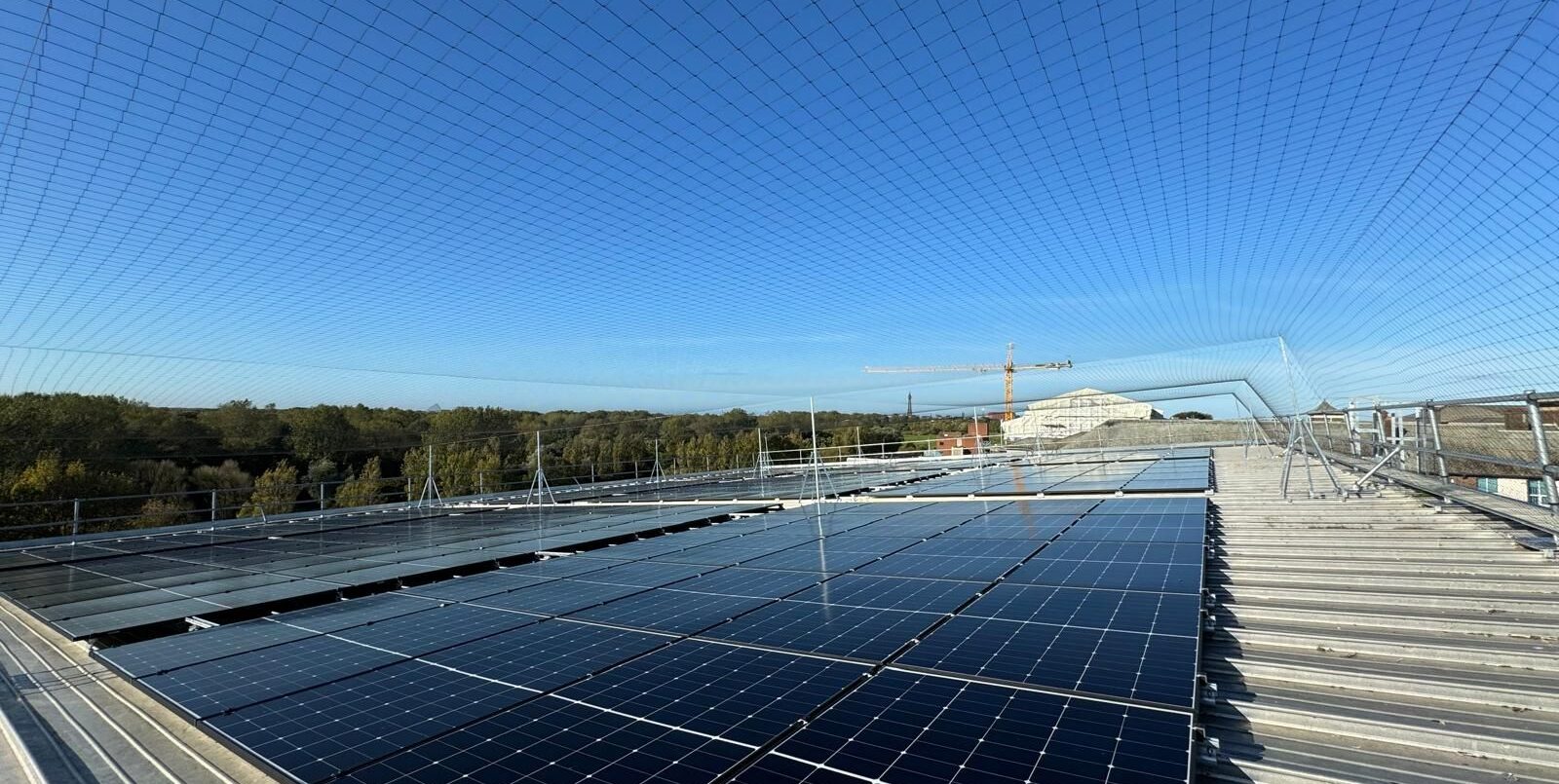
PV panels are a frequently seen source of pigeon issues across Welsh Harp! The gap between the panels and the roof tiles creates shelter and warmth throughout the entire year, and birds nesting beneath them leave guano that causes water damage, blocks gutters and drains, and slowly degrades roofing materials over time.

Solar panel bird proofing involves the fixing of mesh and clip systems around the perimeter of each panel to properly seal any existing gaps. The clip system attaches itself around the panel frame without damaging the panels or impacting their energy output, whilst the mesh installation actively prevents birds from nesting beneath the panels and ensures the problem does not return season after season.
Pest Bird Species in Welsh Harp
Feral pigeons and gulls are responsible for the lion’s share of bird pest call outs across Welsh Harp, though starlings, sparrows and many other species are just as capable of causing fouling, noise and structural damage to properties throughout the area. Pigeons? They can be guarded against right away! Gulls are a separate issue altogether though, as they are protected by law, meaning the approach taken will differ depending on whether or not nesting is already underway.
Feral pigeons in Welsh Harp
Feral pigeons make up the most prevalent pest bird species found all over Welsh Harp. They form roosting and nesting sites on ledges, fire escapes, rooftops, and bridge structures across the area, leaving considerable quantities of bird droppings that raise a public health and safety concern whilst causing significant and ongoing maintenance costs for property managers.

Bird guano produced by feral pigeons is inherently acidic in nature and actively increases the deterioration of both metalwork and stonework through corrosion. The droppings themselves are capable of harbouring salmonella alongside a range of other dangerous pathogens, and guidance issued by the RSPH clearly identifies bird waste as a serious public health concern for commercial premises, particularly in instances where birds are roosting in areas situated above food storage or preparation zones.
Gulls and seagulls in Welsh Harp
Seagulls have nested on Welsh Harp buildings for decades and have largely lost their wariness of people outside the breeding season. Once eggs are deposited, routine roof access ceases, outdoor spaces directly beneath the nest become hard to use, and swooping and calling increases until chicks fledge in late summer.
Pigeons and seagulls frequently occupy the same rooftops, yet controlling gulls presents a significantly greater challenge. Gulls are more substantial, long-living birds that habitually return to the exact same nesting site from one year to the next, and they are afforded full legal protection under the Wildlife and Countryside Act 1981.
Dismantling a gull nest or collecting its eggs without the necessary licence is not permitted under current legislation. Our team operates fully within the established legal framework governing pest management in relation to protected species, offering straightforward guidance on the actions that may be taken without delay alongside those that will require a formal licence application, supported by recorded evidence of public health or safety concerns.
Bird Proofing for Welsh Harp Properties
Protecting a Welsh Harp property from pest birds relies wholly on identifying the best-suited solution for the specific building in question. Although bird spikes prove effective on narrow ledges, they are less effective across wider surfaces where gaps remain, and netting that has been incorrectly specified for either the bird species or the structural context will create access points almost immediately.
Our pest control technicians carry out a full site survey before suggesting any system whatsoever. Every part of the building is inspected, not merely the clearest roosting points, because birds will inevitably move to neighbouring surfaces once the most appealing locations have been treated.
Bird control is something we are genuinely passionate about getting right! Our measures work through exclusion and deterrence to stop birds from nesting on roofs and ledges. We advise every client on which method suits the species involved and the legal protections that apply. Every single solution we deliver is both effective and completely humane!
Physical deterrence remains the cornerstone principle of non-lethal bird control, with pigeon proofing and deterrent methods handling the overwhelming majority of residential and commercial requirements, entirely removing the need for licensed lethal intervention.
We also offer pest management contracts for Welsh Harp properties that feature planned inspections, compliance reports for environmental health purposes, and a prompt response service between visits should any new bird activity be identified.
