


Bird Control Services in Tokyngton
We employ an extensive range of bird control methods to deter and exclude pest birds from residential and commercial buildings. The most effective combination works best really will depend on the building, the species, and the scale of the problem, and our pest control technicians will inspect the site before proposing a single solution!

Bird spikes and bird wire
Bird spikes and bird wire rank amongst the most commonly used solutions for deterring birds from settling on ledges, window sills, parapet walls, and roof ridges. Standard stainless steel spikes are designed to cover flat ledge surfaces and prevent birds from roosting without causing them any harm.

Steel springs and wires are fixed between pillars or anchor points across ledges and structural surfaces to create bird wire systems. The wire forms an unstable landing zone that birds will not use. Once correctly installed, both systems endure harsh weather conditions without requiring regular maintenance.
Bird netting in Tokyngton
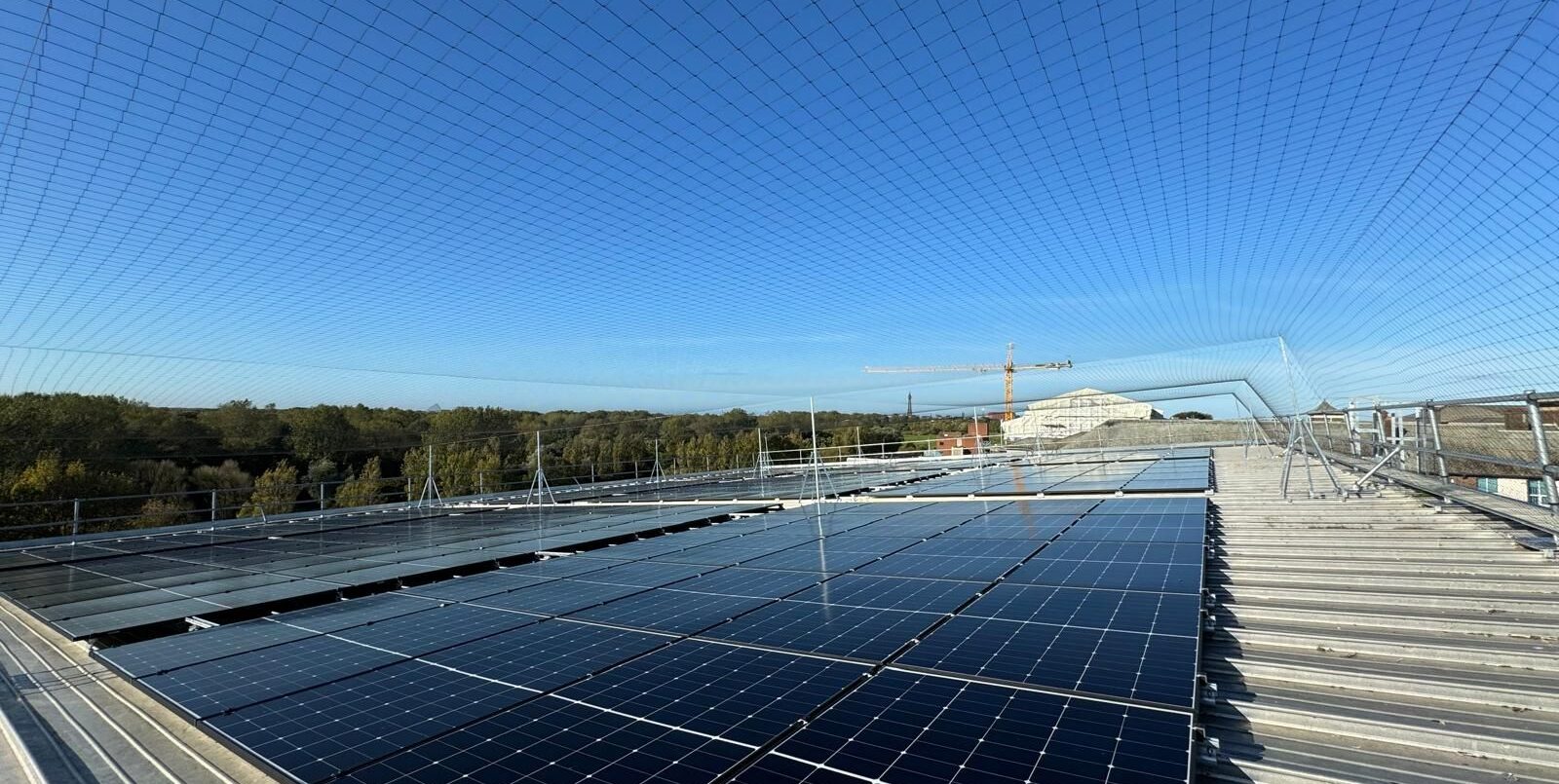
Bird netting is a very effective exclusion method, sealing off broad areas such as roof void spaces, loading bays, under-canopy spaces and bridges, and open outdoor courtyards. When correctly designed, netting keeps birds from nesting and perching within a given space entirely.

Pigeon netting and gull grade netting use various mesh sizes to deal with each species. Our pest control technicians specify the mesh gauge, fixing system and support structure for the site because netting installed with the wrong gauge permits birds access through gaps almost immediately.
Falconry and birds of prey
Falconry services employ specially trained hawks and other birds of prey to chase pest birds away from a particular location. The appearance of a bird of prey disrupts established roosting behaviour and prompts birds in urban settings to abandon the site altogether.
Routine hawk deployment is most effective across exposed locations such as car parks, stadiums, retail parks and expansive rooftops as a ethical bird deterrent. Falconry visits and monitoring are planned during and beyond the breeding season, continuing until the site is fully vacated as a roost.
Solar panel bird proofing
Solar panels often experience pigeon-related issues across Tokyngton. The gap formed between the panels and the underlying roof tiles offers birds a sheltered, warm environment throughout every season, and the accumulation of bird guano from nesting activity leads to damp-related damage, obstructed gutters and drains, and the steady deterioration of roofing materials.

Photovoltaic panels bird proofing involves installing a mesh and clip system around the perimeter of each panel to fully seal the underlying gap. The clip system secures firmly around the panel frame without penetrating the panels themselves or compromising their energy output, whilst the mesh acts as a effective barrier that prevents birds from nesting beneath the panels and ensures the problem does not return over time.
Pest Bird Species in Tokyngton
Feral pigeons and gulls are account for the bulk of bird pest enquiries reported across Tokyngton, though starlings, sparrows, and a variety of additional bird species contribute significantly to fouling, noise disturbance, and structural deterioration on properties throughout the area. Pigeons are a species against which proofing measures can be implemented straight away. Gulls, however, carry legal protection, and the appropriate course of action will differ greatly depending on whether nesting activity is already in progress on the affected property.
Feral pigeons in Tokyngton
Feral pigeons rank as Tokyngton’s most frequent pest bird. They gather on ledges, fire escapes, rooftops and bridge structures all over the area, leaving substantial volumes of droppings that present public health and safety risks whilst causing considerable ongoing maintenance costs for property managers.

Feral pigeon guano is inherently corrosive in composition and actively hastens the deterioration of both metal finishes and stone surfaces through damaging chemical action. The droppings themselves are known carriers of salmonella and a range of additional pathogens of concern, and guidance issued by the Royal Society for Public Health firmly identifies bird waste as a substantial public health risk for commercial premises, particularly where birds are operating in proximity to food storage or preparation areas.
Gulls and seagulls in Tokyngton
Seagulls have been establishing nests on Tokyngton buildings for several decades and have, for the most part, dropped their natural caution around people outside of the breeding season. Once eggs have been laid, routine access to the roof must cease, outdoor spaces situated directly beneath the nest become challenging to use, and the dive-bombing behaviour along with continuous calling grows progressively intense until the chicks take flight towards the end of summer.
Pigeons and seagulls often occupy the same rooftops, yet handling gull populations poses a much greater challenge. Gulls are bigger and longer living birds that faithfully return to identical nesting locations season after season, and they benefit from full legal protection under the Wildlife and Countryside Act 1981.
In legal terms, you absolutely may not remove a gull nest or its eggs without holding the appropriate licence! Our team function fully within the legal framework governing pest management around protected species, offering clear guidance on what actions can be taken straight away and what will need a formal licence application supported by documented public health or safety grounds.
Bird Proofing for Tokyngton Properties
Safeguarding a Tokyngton property from pest birds depends entirely on picking the most appropriate solution for the specific building in question. While bird spikes perform reliably on narrow ledges, they are less effective across wider surfaces where gaps remain, and netting that has been incorrectly specified for either the bird species or the structural context will allow access points almost immediately.
Our pest control technicians undertake a full site survey before proposing any system. The survey covers the entire building, not just the obvious roost points, because birds will shift to nearby surfaces once the most attractive ones are treated.
Our bird control measures operate through the methods of blocking access and dissuasion, stopping birds from birds from creating nesting sites on roofs and ledges. We direct our clients to the most appropriate method based on the species involved and the legal protections that govern them, and every approach we provide is both successful and compassionate.
Ethical bird control is based on physical exclusion as its core method, with pigeon proofing and deterrence dealing with the vast majority of residential and commercial projects without any requirement for licensed lethal control whatsoever!
We offer pest management contracts for Tokyngton properties covering scheduled visits, compliance reports for environmental health purposes, and rapid response between visits should fresh bird activity be identified.
