


Bird Control Services in Woburn Sands
We apply a selection of bird control methods to deter pest birds from both home and industrial buildings, and the best combination depends entirely upon the building itself, the species involved, and the extent of the infestation, which is why our pest control technicians undertake a careful site survey before giving any recommendations whatsoever.

Bird spikes and bird wire
Bird spikes and bird wire represent two of the most widely adopted systems for preventing birds from perching on ledges, window sills, parapet walls and roof ridges. Standard stainless steel spikes are designed to cover flat ledge surfaces, stopping birds from roosting without doing them any harm.

Bird wire systems function by attaching steel springs and wire{s} between supports or attachment points along ledges and structural areas. This configuration generates an unstable perching area that birds are naturally inclined to steer clear of. Once correctly mounted, both systems are built to survive harsh weather conditions without needing regular care.
Bird netting in Woburn Sands
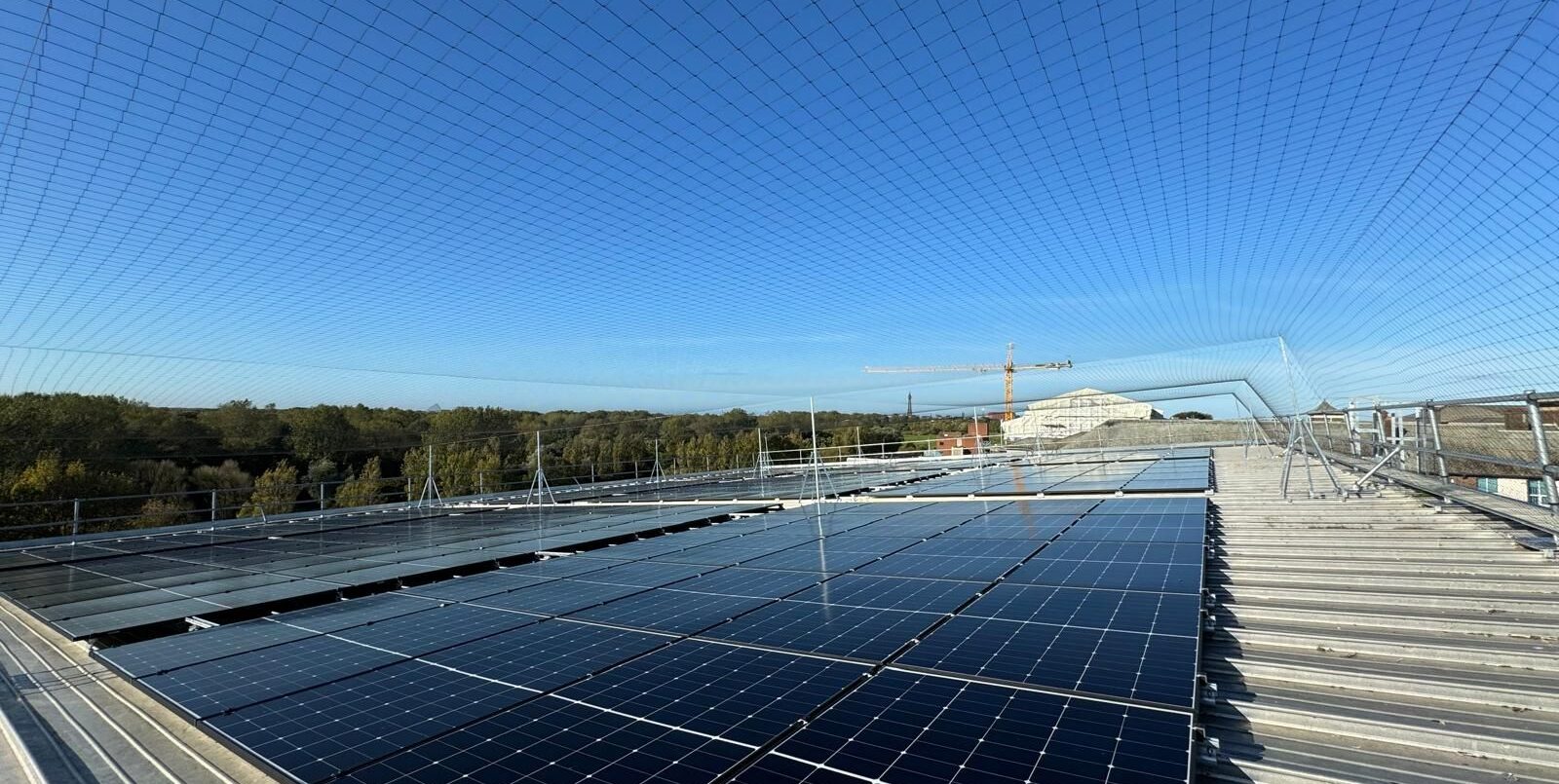
Bird netting is a proven exclusion method used to enclose extensive areas including roof voids, loading bays, under canopies and bridges, and open courtyards. When correctly designed, netting prevents birds from building nests and settling in a space completely!

Pigeon netting and gull grade netting use different mesh sizes to address each species. Our pest control technicians specify the mesh gauge, fixing system and support structure for the site because netting installed with the wrong gauge allows birds access through gaps almost immediately.
Falconry and birds of prey
Falconry services employ experienced birds of prey and other hunting birds to scare pest birds away from a site. The presence of a bird of prey completely disrupts existing roosting patterns and causes birds in urban environments to depart from the site entirely!
Regular deployment of hawks as a humane bird deterrent proves best across broad locations such as car parks, stadiums, retail parks and large rooftops. Falconry visits are arranged on a set basis throughout and beyond the breeding season, with the programme remaining active until the site no longer operates as a roosting area.
Solar panel bird proofing
Solar PV panels are one of the most frequent sources of pigeon challenges across Woburn Sands. The gap that forms between the panels themselves and the underlying roof tiles creates a protected, warm environment that continues to be welcoming throughout every season, luring birds to nest beneath them. The resulting accumulation of bird guano causes water damage, blocks gutters and drainage systems, and steadily deteriorates roofing materials over time.

Solar array bird proofing employs mesh and clip systems fitted around the panel perimeter to seal the gap fully. The clip system fixes around the panel frame without penetrating the panels or compromising their output in any way, and the mesh installation stops birds from nesting beneath the panels while preventing the problem from returning season after season!
Pest Bird Species in Woburn Sands
Feral pigeons and gulls generate the bulk of bird pest call-outs across Woburn Sands, though starlings, sparrows, and numerous other species also contribute to fouling, noise, and structural damage on area properties. Pigeons can be proofed against straight away. Gulls are protected by law, so the required approach changes depending on whether active nesting is already under way.
Feral pigeons in Woburn Sands
Feral pigeons remain the most common avian pest species found across Woburn Sands. They set up roosting and nesting sites upon ledges, fire escapes, rooftops and bridge structures across the area, generating substantial quantities of bird droppings that present both a public health and safety concern and considerable maintenance expenditure for those responsible for managing properties.

Bird guano produced by feral pigeons is highly acidic and actively speeds up corrosion on both metal surfaces and stonework. The droppings themselves can harbour salmonella and a range of other dangerous pathogens, and RSPH guidance firmly identifies bird waste as a serious public health risk for any commercial premises where birds are roosting or moving above food storage or preparation areas.
Gulls and seagulls in Woburn Sands
Gulls have been becoming at home on Woburn Sands rooftops for many decades now and have thoroughly lost their fear of people outside the breeding season. As soon as eggs appear, routine roof access comes to a complete stop, any outdoor spaces sitting directly beneath the nest become almost unusable, and the aggressive swooping and loud squawking only gets more intense until the chicks finally fledge in late summer!
Pigeon birds and seagulls often occupy the same rooftops, yet controlling gull populations presents a far harder challenge. Gulls are more sizeable and longer living birds that regularly return to the very same nesting sites each year, and they benefit from full legal protection under the Wildlife and Countryside Act 1981.
Taking apart a gull nest or tampering with its eggs without the appropriate authorisation is strictly prohibited under current regulations. Our team works entirely within the established legal framework governing vermin management in relation to protected species, delivering clear guidance on which interventions may be undertaken without delay and which require a formal licence application, supported by documented evidence of public health or safety concerns.
Bird Proofing for Woburn Sands Properties
Protecting a Woburn Sands property from pest birds depends entirely on selecting the right deterrent method for that individual building. Bird spikes perform reliably on narrow ledges but do not provide adequate coverage across wider surfaces, and netting that has been poorly specified for either the bird species or the structure will allow birds to gain access through gaps straight away.
Our pest control technicians undertake a full site assessment prior to suggesting any solution. The survey covers the entire structure rather than solely the most apparent roosting locations, given that birds will shift to neighbouring surfaces once the most favourable ones have been treated.
Our bird control methods function through blocking access and discouragement, preventing birds from roosting on roof areas and overhangs. We guide clients on the best-suited solution for the species involved, bearing in mind all relevant legal protections, and every measure we carry out is both efficient and kind.
Humane bird control relies on exclusion measures as its primary method, with pigeon proofing and deterrence addressing the overwhelming majority of residential and commercial work without any requirement for licensed lethal intervention.
We also deliver pest management contracts for Woburn Sands properties that encompass routine inspections, compliance reports for environmental health purposes, and a fast response service between visits should any new bird activity be identified.
