


Bird Control Services in South Willesborough
We employ a number of bird control methods to exclude pest birds from both residential and industrial buildings, and the most suitable combination depends entirely upon the building itself, the species involved, and the scale of the infestation, which is why our pest control technicians conduct a thorough site survey before offering any recommendations whatsoever.

Bird spikes and bird wire
Bird spikes and bird wire stand amongst the most commonly employed solutions for deterring birds from settling upon ledges, window sills, parapet walls, and roof ridges. Standard stainless steel spikes are designed to cover flat ledge surfaces, preventing birds from roosting whilst causing absolutely no harm whatsoever to them.

Bird wire systems work by fixing steel springs and wires between pillars or anchor points across ledges and built surfaces, producing an unstable landing zone that prevents birds from settling. Once correctly installed, both systems are engineered to withstand harsh weather conditions with minimal ongoing maintenance required.
Bird netting in South Willesborough
Bird netting seals off large areas including roof voids, loading bays, canopies, bridges and open courtyards. Correctly specified netting prevents birds from roosting and nesting in a space altogether.

Pigeon netting and gull grade netting are produced with distinct mesh sizes in order to fulfil the specific requirements of each bird species. Our pest control technicians will assess the appropriate mesh gauge, fixing system and support structure for your individual site, as netting that has been installed with an incorrect gauge will enable birds to pass through the gaps straight away.
Falconry and birds of prey
Falconry services deploy trained hawks and other birds of prey to flush pest birds away from a site. A bird of prey’s presence breaks established roosting patterns and pushes birds in urban environments off the site completely.
Regular falconry visits are scheduled throughout and beyond the breeding season, carrying on until the site is no longer being used as a roost.
Using hawks as a reliable and humane bird deterrent works most effectively across wide-open environments such as parking areas, stadiums, retail parks, and large rooftops. Regular falconry visits are scheduled all the way through and beyond the breeding season, with the programme continuing on until the site is no longer being used as a roosting location.
Solar panel bird proofing
Solar PV panels stand as one of the most persistent sources of pigeon challenges across South Willesborough. The gap that is present between the panels themselves and the underlying roof tiles forms a sheltered, warm environment that continues to be welcoming throughout every season, luring birds to roost beneath them. The resulting accumulation of bird guano leads to water damage, clogs gutters and drainage systems, and steadily deteriorates roofing materials over time.

Photovoltaic panel bird proofing involves applying a mesh and clip system around the perimeter of each panel to thoroughly seal the underlying gap. The clip system holds firmly around the panel frame without piercing the panels themselves or compromising their energy output, whilst the mesh acts as a reliable barrier that keeps birds from nesting beneath the panels and ensures the problem does not return over time.
Pest Bird Species in South Willesborough
{Feral pigeons and gulls are account for the overwhelming majority of bird pest enquiries submitted across South Willesborough, though starlings, sparrows, and a range of other species are just as capable of causing fouling, noise, and structural damage to properties throughout the area. Pigeons are suited to immediate proofing solutions. Gulls, however, benefit from legal protection and therefore require a carefully considered course of action that is shaped entirely by whether or not nesting activity is already underway.}
Feral pigeons in South Willesborough
Feral pigeons are regarded as South Willesborough’s most common pest bird. They perch on ledges, fire escapes, rooftops and bridge structures all over the area, leaving substantial volumes of droppings that pose public health and safety risks whilst creating considerable ongoing maintenance costs for property managers.

Ferrel pigeon guano is acidic and promotes corrosion on metal and stone surfaces. Droppings carry salmonella and additional pathogens. RSPH guidance identifies bird waste as a significant public health risk at commercial premises where birds are active above food storage or preparation areas.
Gulls and seagulls in South Willesborough
Seagulls have been developing nesting colonies on South Willesborough’s rooftops for several decades and have, over that time, become increasingly used to human presence outside of the breeding season. Once eggs have been laid, routine access to the roof becomes unworkable, outdoor spaces situated directly beneath the nest turn into awkward areas to use, and both the swooping behaviour and persistent calling intensify markedly until the chicks reach fledging age in late summer.
Pigeons and seagulls regularly make use of the same rooftops, but gull control creates far greater challenges. Gulls are bigger , longer-lived birds that revisit to the very same nesting sites year after year, and they enjoy full legal protection under the Wildlife and Countryside Act 1981.
From a legal standpoint, you absolutely may not remove a gull nest or its eggs without holding the appropriate licence! Our specialists operates fully within the legal framework governing pest management around protected species, giving concise guidance on what actions can be taken right away and what will need a formal licence application supported by documented public health or safety grounds.
Bird Proofing for South Willesborough Properties
Shielding a South Willesborough property against pest birds necessitates meticulous selection of the most appropriate deterrent method for the specific building in question. Bird spikes operate dependably on narrow ledges, yet they are unable to provide adequate coverage across wider surfaces, whilst netting that has been incorrectly specified for either the bird species or the structure will give birds immediate access through the resulting gaps.
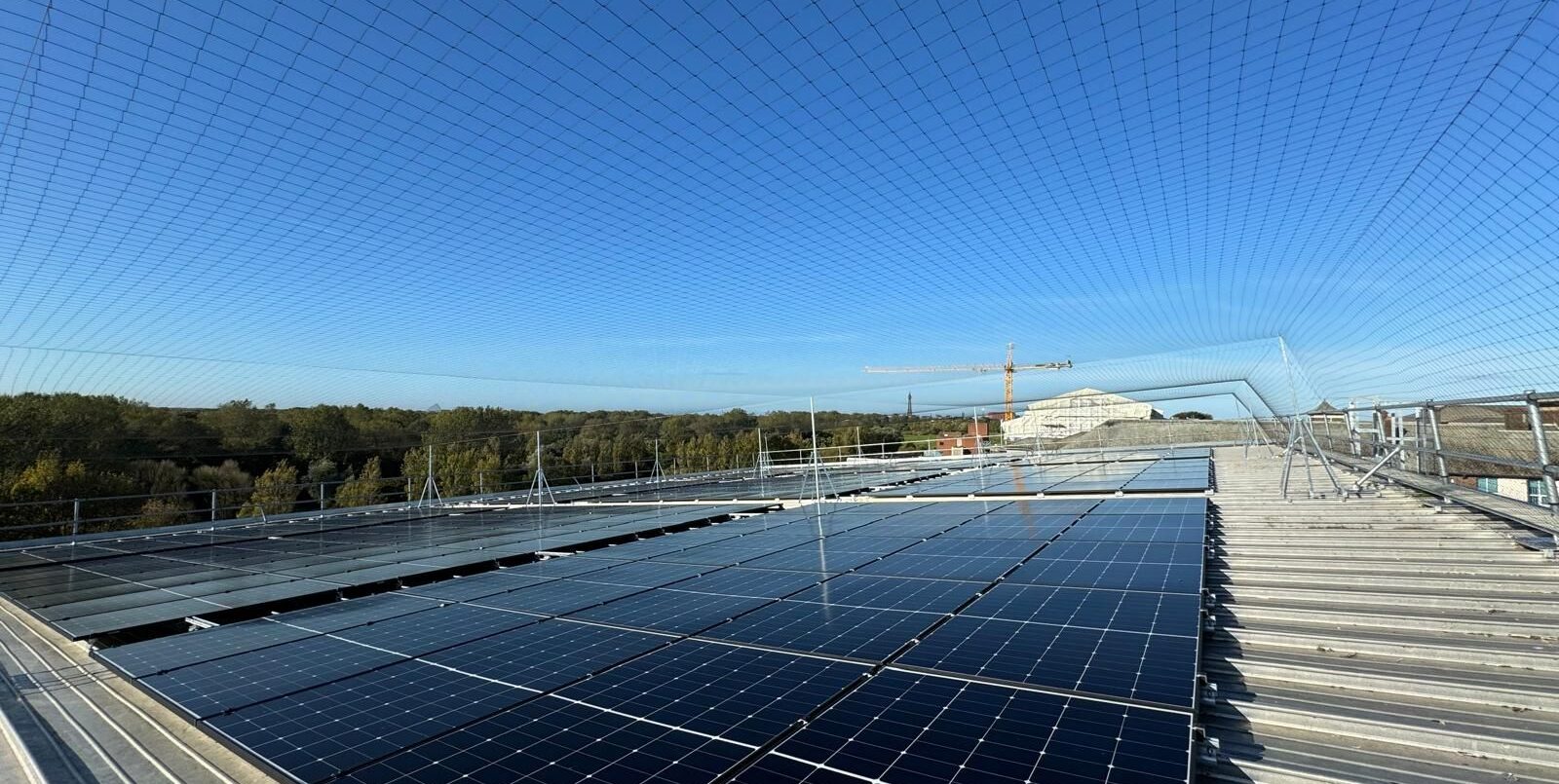
Our pest control technicians complete a detailed site survey before recommending an appropriate system at all. This includes the whole building rather than just the obvious roosting spots, because birds will merely move to neighbouring surfaces once the best ones have been dealt with!
Bird control is something we are genuinely passionate about getting right! Our measures work through exclusion and deterrence to stop birds from nesting on roofs and ledges. We advise every client on which method suits the species involved and the legal protections that apply. Every single solution we deliver is both effective and completely humane!
Physical deterrence forms the cornerstone principle of non-lethal bird control, with pigeon proofing and deterrence methods covering the overwhelming majority of domestic and commercial requirements, entirely obviating the need for licensed lethal intervention.
We deliver pest management contracts for South Willesborough properties covering scheduled inspections, compliance reports for environmental health purposes, and rapid attendance between visits should fresh bird activity be identified.
