


Bird Control Services in Seven Sisters
We implement a wide range of bird control methods to prevent and exclude pest birds from residential and commercial buildings. The most effective combination performs best really will depend on the building, the species, and the scale of the problem, and our pest control technicians will inspect the site before suggesting a single measure!

Bird spikes and bird wire
Bird spikes and bird wire rank amongst the most commonly used solutions for deterring birds from settling on ledges, window sills, parapet walls, and roof ridges. Standard stainless steel spikes are designed to cover flat ledge surfaces and prevent birds from roosting without causing them any harm.

Bird wire systems function by fastening steel spring elements and wire{s} between pillars or attachment points along sills and structural surfaces. This system forms an unstable resting spot that birds are naturally inclined to steer clear of. Once correctly installed, both systems are built to survive harsh weather conditions without requiring regular care.
Bird netting in Seven Sisters
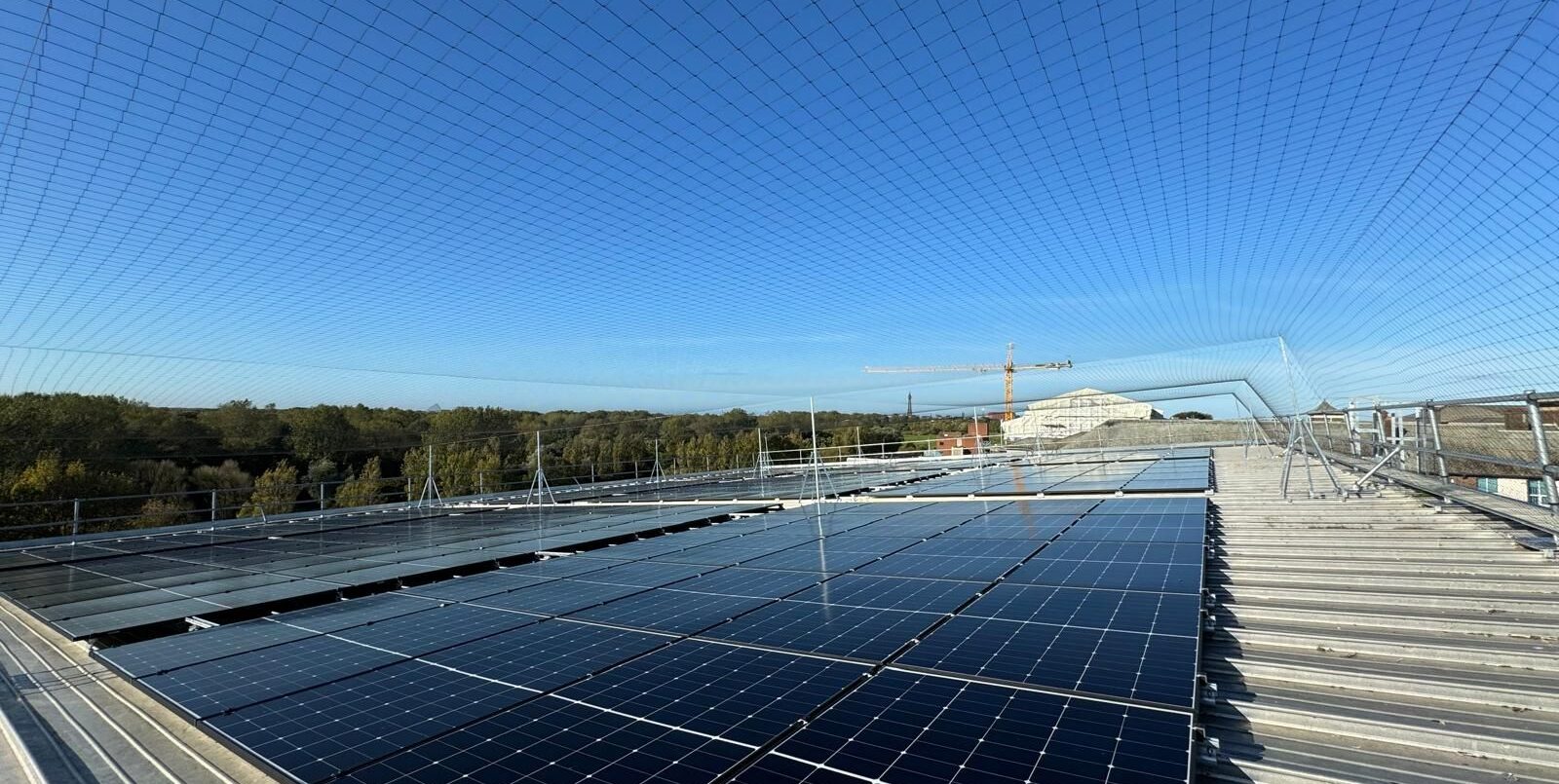
Bird netting serves as a highly effective exclusion method, sealing off expansive areas such as roof voids, loading bays, the underside of canopies and bridges, and open courtyards. When specified correctly, it prevents birds from nesting and roosting within a given space altogether.

Pigeon netting and gull grade netting use various mesh sizes to address each species. Our pest control technicians recommend the mesh gauge, fixing system and support structure for the site because netting installed with the wrong gauge allows birds access through gaps straight away.
Falconry and birds of prey
The trained hawks and other birds of prey in falconry services serves to deter pest birds from a specific location. When a bird of prey is introduced to the area, it naturally disturbs any established roosting behaviour, prompting pest birds in urban settings to leave the site altogether.
Regular falconry visits are scheduled throughout and beyond the breeding season, remaining in place until the site is no longer being used as a roost.
Using hawks as a steady and humane bird deterrent works most effectively across open environments such as vehicle parks, stadiums, retail parks, and large rooftops. Regular falconry visits are scheduled throughout and beyond the breeding season, with the programme carrying on until the site is no longer being used as a roosting location.
Solar panel bird proofing
Solar arrays are one of the most frequent catalysts for pigeon-related disturbances across Seven Sisters, where the inviting gap between the panels and the roof tiles offers birds a protected refuge throughout every season. The breeding activity that follows tells a all-too-familiar and damaging story, one written in bird guano that slowly wreaks havoc on rooftops, blocking gutters and drains whilst steadily degrading the very materials that keep a building protected over time.

PV panel bird proofing involves the fixing of mesh and clip systems around the perimeter of each panel to properly seal any existing gaps. The clip system fastens itself around the panel frame without damaging the panels or reducing their energy output, whilst the mesh installation effectively prevents birds from nesting beneath the panels and ensures the problem does not return year after year.
Pest Bird Species in Seven Sisters
{Feral pigeons and gulls are behind the vast majority of bird pest enquiries logged across Seven Sisters, though starlings, sparrows, and a range of other species are equally capable of causing fouling, noise, and structural damage to properties throughout the area. Pigeons are ideal for immediate proofing solutions. Gulls, however, benefit from legal protection and therefore require a carefully considered course of action that is shaped entirely by whether or not nesting activity is already underway.}
Feral pigeons in Seven Sisters
Feral pigeons are undeniably the most prevalent pest bird found across Seven Sisters!. They perch and breed on window ledges, escape stairs, rooftops, and bridgeworks throughout the area, producing substantial volumes of droppings that create a clear public health and safety concern, as well as ongoing maintenance costs for property managers.

Guano from feral pigeons produced by feral pigeons is inherently acidic in nature and actively accelerates the deterioration of both metalwork and stonework through corrosion. The droppings themselves are capable of harbouring salmonella alongside a range of other hazardous pathogens, and guidance issued by the RSPH clearly identifies bird waste as a significant public health concern for commercial premises, particularly in instances where birds are frequenting areas situated above food storage or preparation zones.
Gulls and seagulls in Seven Sisters
Gulls have been establishing nests on Seven Sisters properties for several decades and have, for the most part, shed their natural caution around people outside of the breeding season. Once eggs have been laid, routine access to the roof must stop, outdoor spaces situated directly beneath the nest become problematic to use, and the diving behaviour along with persistent calling grows progressively intense until the chicks take flight towards the end of summer.
Pigeons and seagulls regularly use the same rooftops, yet handling gull populations presents a significantly bigger challenge. Gulls are more sizeable and longer living birds that consistently come back to the same nesting locations season after season, and they benefit from full legal protection under the Wildlife and Countryside Act 1981.
Taking apart a gull nest or interfering with its eggs without the appropriate authorisation is absolutely prohibited under current law. Our team works entirely within the established legal parameters governing pest management in relation to protected species, delivering clear guidance on which interventions may be undertaken without delay and which necessitate a formal licence application, supported by documented evidence of public health or safety concerns.
Bird Proofing for Seven Sisters Properties
Protecting a Seven Sisters property against nuisance birds requires identifying the most suitable method for the building. Bird spikes perform well on slim ledges but leave gaps on broader surfaces, and netting badly specified for the species or structure gives birds easy access through gaps.
Our pest control technicians complete a full site survey before recommending any system at all. This encompasses the full building rather than just the obvious roosting spots, because birds will merely move to nearby surfaces once the most attractive ones have been dealt with!
Our bird control methods employ exclusion and deterrence techniques to deter birds nesting on roofs and ledges. We guide clients on the most suitable approach for each species, taking into account all relevant legal protections, and every solution we deliver is both successful and ethical.
Physical exclusion stands as the cornerstone principle of non-lethal bird control, with pigeon proofing and deterrence methods covering the overwhelming majority of domestic and commercial requirements, entirely doing away with the need for licensed lethal intervention.
We provide pest management contracts for Seven Sisters properties covering scheduled inspections, compliance reports for environmental health purposes, and rapid response between visits should fresh bird activity be identified.
