


Bird Control Services in Seal
We implement a range of bird control methods to exclude pest birds from both domestic and industrial buildings, and the most suitable combination depends entirely upon the building itself, the species involved, and the scale of the infestation, which is why our pest control technicians undertake a detailed site survey before providing any recommendations whatsoever.

Bird spikes and bird wire
Bird spikes and bird wire rank among the most widely used systems out there for keeping birds away from ledges, window sills, parapet walls, and roof ridges! Standard stainless steel spikes work exceptionally well across flat ledge surfaces, stopping birds from roosting whilst causing absolutely no harm whatsoever.

Bird wire systems work through a network of steel springs and wires that are stretched between pillars or anchor points along ledges and structural surfaces. This configuration generates an unstable landing zone that birds instinctively steer clear of. Once correctly secured, both systems are highly hard-wearing to harsh weather conditions and require no regular upkeep thereafter.
Bird netting in Seal
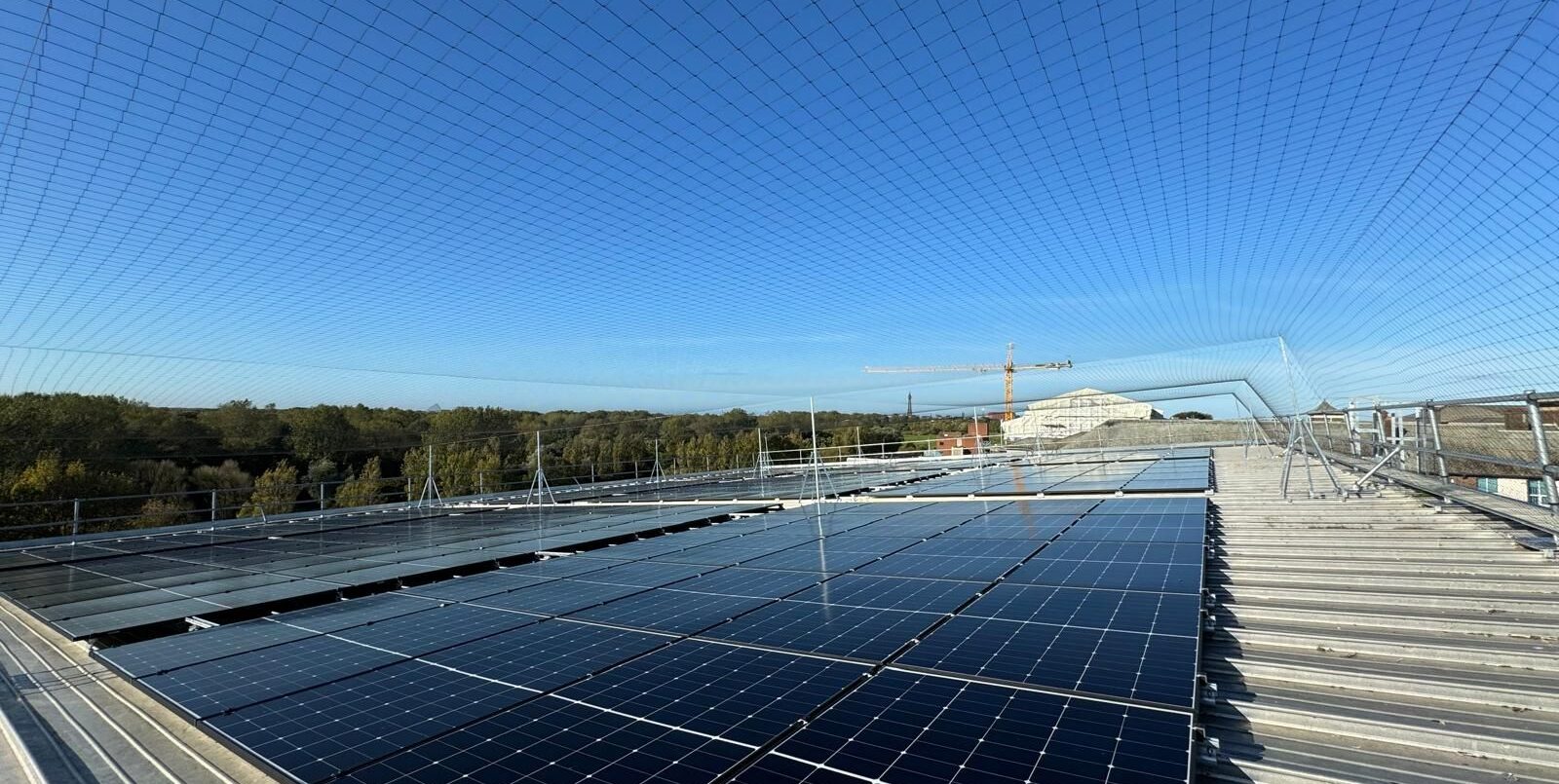
Bird netting serves as a highly effective exclusion method, sealing off expansive areas such as roof voids, loading bays, the underside of canopies and bridges, and open courtyards. When specified correctly, it prevents birds from nesting and roosting within a given space altogether.

Pigeon netting and gull grade netting are made with different mesh sizes that are specifically designed to target each species. Our pest control technicians identify the correct mesh gauge, fixing system and support structure for each individual site, because incorrectly installed netting with the wrong gauge will let birds through the gaps almost immediately!
Falconry and birds of prey
The use of trained hawks and other birds of prey in falconry services helps to drive away pest birds from a specific location. Once a bird of prey is released to the area, it naturally disrupts any established roosting behaviour, prompting pest birds in urban settings to vacate the site entirely.
Regular hawk deployment works optimally across open locations such as car parks, sports stadiums, shopping parks and large rooftops as a kind bird deterrent. Falconry sessions are arranged across and after the breeding season, carrying on until the site is fully emptied as a roost.
Solar panel bird proofing
Solar PV panels are a frequent source of pigeon-related issues across Seal. The void that lies between the panels and the roof tiles offers birds a protected and temperate environment in every season{s}, and when pigeons nest beneath them, the resulting bird guano can bring about water damage, blocked gutters and drains, and the gradual deterioration of roofing materials.

Solar panel bird proofing operates by placing a mesh and clip system along the entire perimeter of each panel to fully seal the gap beneath. The clip system is secured around the panel frame without ever penetrating the panels or impacting their output, whilst the mesh installation itself deters birds from nesting underneath and makes sure the problem does not return with each new season.
Pest Bird Species in Seal
Feral pigeons and gulls are account for the bulk of bird pest enquiries received across Seal, though starlings, sparrows, and a variety of additional bird species play a significant role in fouling, noise disturbance, and structural deterioration on properties around the area. Pigeons are a species against which proofing measures can be implemented without delay. Gulls, however, carry legal protection, and the appropriate course of action will vary considerably depending on whether nesting activity is already taking place on the affected property.
Feral pigeons in Seal
Feral pigeons are regarded as Seal’s most common pest bird. They occupy ledges, fire escapes, rooftops and bridge structures across the area, creating substantial volumes of droppings that bring public health and safety risks whilst resulting in considerable ongoing maintenance costs for property managers.

Feral pigeon guano is inherently corrosive in composition and readily accelerates the deterioration of both metal surfaces and stonework through caustic chemical action. The droppings themselves are known carriers of salmonella and a range of further pathogens of concern, and guidance issued by the Royal Society for Public Health explicitly identifies bird waste as a considerable public health risk for commercial premises, particularly where birds are operating in proximity to food storage or preparation areas.
Gulls and seagulls in Seal
Seagulls have been setting up nests on Seal properties for several decades and have, for the most part, dropped their natural caution around people outside of the breeding season. Once eggs have been laid, normal access to the roof must cease, outdoor spaces situated directly beneath the nest become challenging to use, and the swooping behaviour along with persistent calling grows progressively intense until the chicks leave the nest towards the end of summer.
Pigeons and seagulls commonly occupy the same rooftops, yet dealing with gull populations creates a far more substantial challenge. Gulls are bigger and more long-lived birds that faithfully go back to identical nesting locations season after season, and they benefit from full legal protection under the Wildlife and Countryside Act 1981.
Our team function fully within the regulatory framework governing pest management around protected species, guiding on what action can be taken straight away and what will require a formal licence application supported by documented safety grounds. Please be aware that removing a gull nest or eggs without a licence is not something that is legally permitted under any circumstances.
Bird Proofing for Seal Properties
Bird-proofing a Seal property against nuisance birds requires choosing the right method for the building. Bird spikes are effective on slim ledges but create gaps on larger surfaces, and netting poorly specified for the species or structure gives birds immediate access through gaps.
Our {pest control} technicians carry out a detailed site assessment prior to recommending any solution. The survey encompasses the entire building, not solely the most noticeable roosting locations, because birds will shift to adjacent surfaces once the most favourable ones have been treated.
Our bird control measures apply exclusion and deterrence techniques to keep birds from nesting on roofs and ledges. We advise clients on which approach is most suitable for the species involved and the legal protections that apply, making sure every solution we provide is both effective and humane.
Ethical bird control relies on physical exclusion as its core method, with pigeon proofing and deterrence covering most residential and commercial work without requiring licensed lethal control.
We also provide pest management contracts for Seal properties that encompass regular inspections, compliance reports for environmental health purposes, and a rapid response service between visits should any new bird activity be identified.
