


Bird Control Services in Regents Park
We use a range of bird control methods to discourage and exclude pest birds from both residential and industrial properties. The best mix will depend on the property itself, the species involved, and the extent of the infestation, which is why our pest control technicians perform a careful site survey before making any advice.

Bird spikes and bird wire
Bird spikes and bird wire rank amongst the most widely used solutions for deterring birds from settling on ledges, window sills, parapet walls, and roof ridges. Traditional stainless steel spikes are designed to cover flat ledge surfaces, preventing birds from roosting whilst ensuring they remain completely unharmed.

Bird wire systems function through a network of steel springs and wires that are taut between pillars or anchor points along ledges and structural surfaces. This configuration forms an unstable landing zone that birds instinctively avoid. Once correctly secured, both systems are highly robust to harsh weather conditions and require no regular upkeep thereafter.
Bird netting in Regents Park
Bird netting blocks off large areas including roof voids, loading bays, canopies, bridges and open courtyards. Correctly specified netting prevents birds from nesting and roosting in a space completely.

Pigeon netting and gull grade netting are manufactured with differing mesh sizes precisely because each species demands a tailored approach. Our pest control technicians carefully determine the appropriate mesh gauge, fixing system and support structure for every individual site, given that netting installed with an incorrect gauge will grant birds access through the gaps almost immediately after installation.
Falconry and birds of prey
Falconry services introduce trained hawks and other birds of prey to chase pest birds away from a site. A bird of prey’s presence breaks established roosting patterns and pushes birds in urban environments off the site completely.
Regular falconry visits are planned during and beyond the breeding season, remaining in place until the site has been fully left as a roost by the birds.
Utilising hawks as a regular and humane bird deterrent can be most effective across open environments such as car parks, stadiums, retail parks and expansive rooftops, where the natural presence of a predator makes the biggest impression. Regular falconry visits are planned throughout and beyond the breeding season, proceeding consistently until the site has been fully abandoned as a roost by the birds.
Solar panel bird proofing
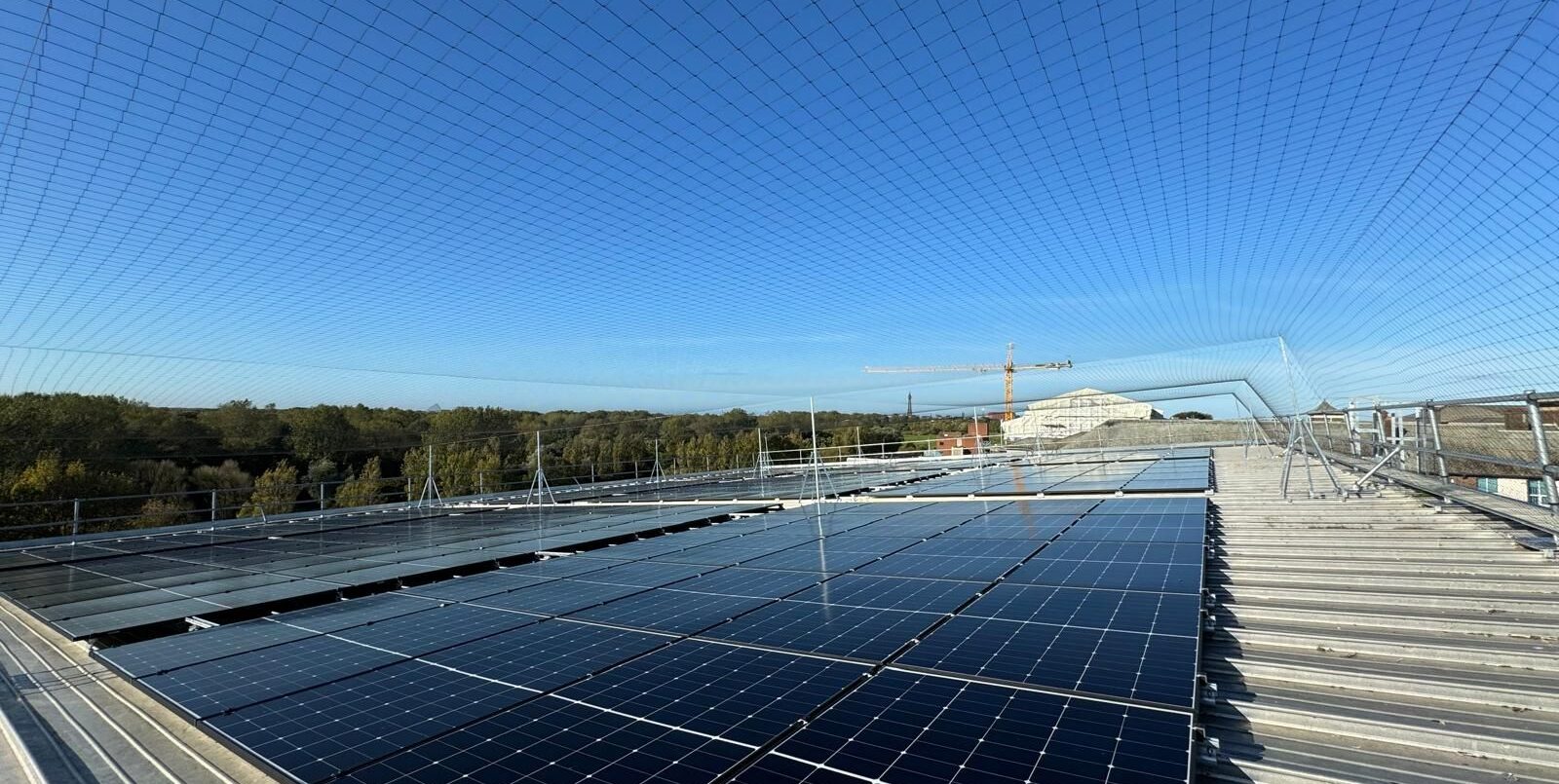
Solar panels stand as one of the most prevalent sources for pigeon-related disturbances across Regents Park, where the welcoming gap between the panels and the roof tiles offers birds a warm sanctuary throughout every season. The nesting activity that follows tells a well-known and damaging story, one written in bird guano that quietly wreaks havoc on rooftops, blocking gutters and drains whilst steadily degrading the very materials that keep a building protected over time.

Solar panel bird proofing functions by fitting a mesh and clip system to the entire perimeter of each panel to completely seal the gap beneath. The clip system secures itself around the panel frame without ever damaging the panels or affecting their output, whilst the mesh installation itself prevents birds from nesting underneath and makes sure the problem does not return with each passing season.
Pest Bird Species in Regents Park
Feral pigeons and gulls are responsible for the lion’s share of bird pest call outs across Regents Park, though starlings, sparrows and numerous other species are equally capable of causing fouling, noise and structural damage to properties throughout the area. Pigeons? They can be protected against at once! Gulls are a different story entirely though, as they are protected by law, meaning the approach taken will differ depending on whether or not nesting is already underway.
Feral pigeons in Regents Park
Feral pigeons are among the most frequently encountered pest bird species across Regents Park. They establish roosting and nesting habits on ledges, fire escapes, rooftops, and bridge structures across the area, resulting in considerable quantities of bird droppings that present a public health and safety concern whilst causing significant ongoing maintenance expenditure for those responsible for managing properties.

Feral pigeon guano is inherently corrosive in composition and readily promotes the deterioration of both metal finishes and stonework through damaging chemical action. The droppings themselves are known carriers of Salmonella and a range of other pathogens of concern, and guidance issued by the Royal Society for Public Health explicitly identifies bird waste as a substantial public health risk for commercial premises, particularly where birds are present in proximity to food storage or preparation areas.
Gulls and seagulls in Regents Park
Seagulls have made Regents Park’s rooftops their habitat for many years now and have grown remarkably comfortable in the presence of people during the less busy months away from breeding season. The instant eggs appear, however, things change completely. Routine access to the roof stops, outdoor spaces sitting directly beneath the nest become practically impossible to occupy, and the ceaseless diving and crying reaches a crescendo that does not ease until the young birds finally leave the nest in the later weeks of summer.
Pigeons and gulls often occupy the same rooftops, but gull control presents greater problems. Gulls are larger , longer living birds that return to the very same nesting sites year after year, and they hold full legal protection under the Wildlife and Countryside Act 1981.
Breaking up a gull nest or tampering with its eggs without the appropriate authorisation is absolutely prohibited under current regulations. Our team functions entirely within the established legal framework governing pest management in relation to protected species, delivering clear guidance on which interventions may be undertaken without delay and which necessitate a formal licence application, supported by documented evidence of public health or safety concerns.
Bird Proofing for Regents Park Properties
Shielding a Regents Park property from pest birds depends entirely on picking the best-fitting solution for the specific building in question. Although bird spikes prove effective on narrow ledges, they are less effective across wider surfaces where gaps remain, and netting that has been incorrectly specified for either the bird species or the structural context will create access points almost immediately.
Our pest control technicians conduct a thorough site assessment prior to suggesting any solution. The survey encompasses the entire structure rather than just the most apparent roosting locations, given that birds will move to neighbouring surfaces once the most favourable ones have been treated.
Our bird control methods operate through preventing entry and repelling, preventing birds from roosting on roof spaces and sills. We guide clients on the most appropriate solution for the species involved, bearing in mind all relevant legal protections, and every measure we carry out is both successful and kind.
Humane bird control places physical exclusion at the centre of its approach, with pigeon proofing and bird deterrence successfully addressing the overwhelming majority of residential and commercial projects without ever needing licensed lethal intervention.
We also offer pest management contracts for Regents Park properties that include routine inspections, compliance reports for environmental health purposes, and a fast response service between visits should any recent bird activity be identified.
