


Bird Control Manchester Experts on Common Local Pest Bird Species
The varied pest species found throughout Millbrook each require their own carefully considered strategy. Which bird species is present shapes the legal standing, the selected method of control, and the timeframe in which the work must be carried out. What follows reflects the situations our bird control team encounters most often across Manchester.
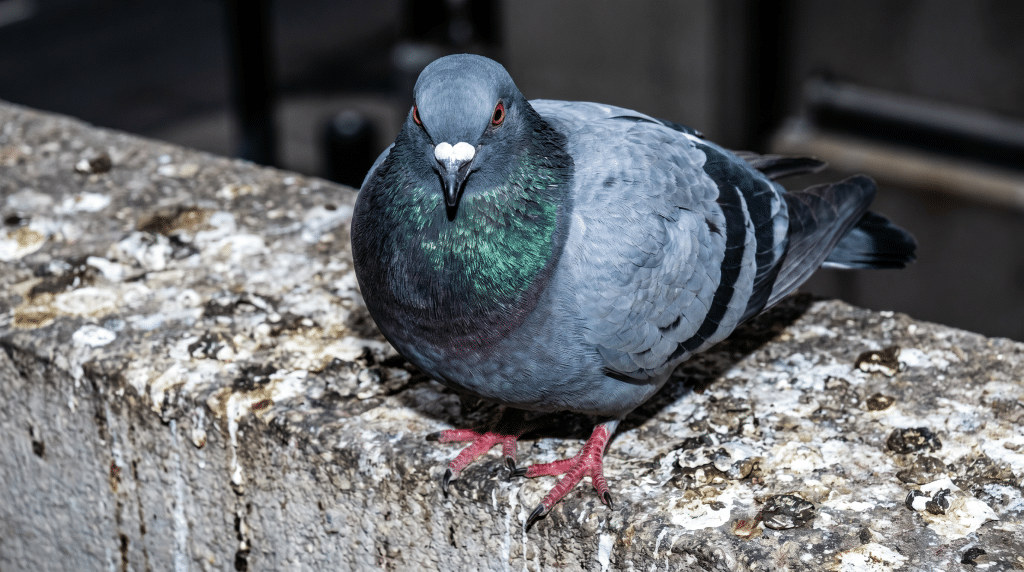

Feral pigeons (Columba livia)
Feral pigeons remain the principal bird pest in Millbrook city centre and the industrial estates and retail parks across Manchester area. For example, Piccadilly Gardens has sustained a heavy, year-round pigeon population for decades, with birds spreading to commercial rooftops, multi-storey car parks, railway arches, and large warehouse units across the region.
Left unmanaged, a lone breeding pair is capable of producing numerous broods throughout the space of a year, meaning that an ignored pigeon roost using a ledge space or roof void can grow into a serious bird infestation within only two breeding seasons.
Feral pigeon fouling is corrosive and, when permitted to build up, causes noticeable harm to roofing membranes and drainage channels, whilst prolonged contact with metal fittings and structural steelwork accelerates the onset of corrosion. As feral pigeons carry no protection under the Wildlife and Countryside Act 1981, both pest control treatment and deterrent installation may be undertaken without the requirement for a licence. Our pigeon control service includes the complete range of exclusion and deterrence methods available.
Gulls (Laridae)
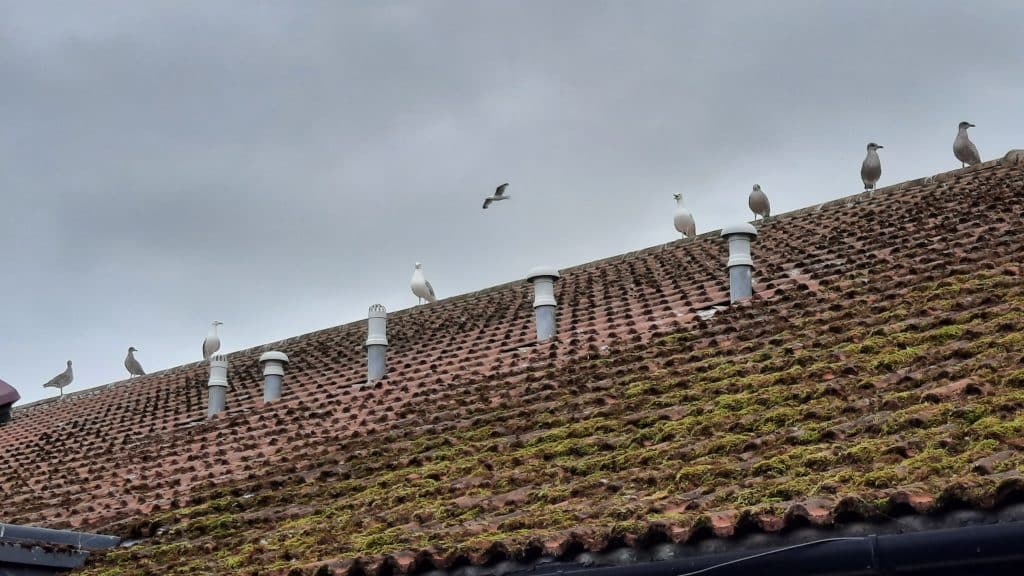
Gull populations have been moving inland across Millbrook for some years now. Herring gulls and lesser black-backed gulls and lesser black-backed gulls alike are settling on level commercial rooftops all throughout the Millbrook area, lured in by food waste from restaurants, retail parks and waste handling sites, not to mention the warmth that vast warehouse rooftops retain right through the breeding season!
Breeding gulls turn more aggressive and defensive, turning existing colonies a genuine safety concern for maintenance staff carrying out regular roof access.
Gulls are protected under the Wildlife and Countryside Act 1981, meaning nesting sites cannot be disturbed without a licence. Natural England issues general licences, including GL41 for public health and safety, permitting licensed pest control companies to carry out certain control activities.
Our service operates within this legal context: we advise on what steps are permitted during the current season and specify deterrent systems to prevent birds reappearing to the same rooftop the next year.
Starlings, sparrows, and corvids
Starlings roosts are to blame for rapid and significant fouling of business properties throughout the autumn and winter months throughout Millbrook, and dried starling guano presents an equally serious health risk as that associated with pigeon droppings.
Domestic sparrows nest inside roof voids and beneath detached fascias across domestic and commercial properties throughout Millbrook. Each species carry legal protection, meaning that the timing and the approach are genuinely important considerations.
Carrion crows, jackdaws and similar birds and magpies and related species are corvid species frequently encountered on industrial locations throughout Greater Manchester, and when these birds construct nest sites inside chimneys or flues they introduce a fire hazard that must be addressed outside of the nesting season. We take note of pigeons and any additional pest bird species identified during the survey, then structure the management programme in accordance with the legal protections that apply to each individual species.
Bird Control Services Throughout Millbrook
Our pest control technicians perform a comprehensive assessment prior to suggesting any bird control measures. The species of bird being managed, the type of building involved, and the extent of the infestation all influence the final specification. The larger proportion of commercial projects require a range of bird control methods rather than a singular solution, as pest birds will just relocate to neighbouring surfaces once a landing point has been effectively closed off. The list of services detailed below reflects what we routinely deploy across Millbrook and the surrounding areas.

Bird netting
Bird netting offers full exclusion across extensive open areas including loading bays, roof voids, canopies and internal courtyards where pigeons settle and roost in significant numbers. A correctly specified system prevents all bird access and remains effective a decade with regular inspections. Our pest control technicians hold PASMA and IPAF certifications for safe installation at height on Millbrook’s taller commercial and industrial buildings, a capability many local pest control providers plainly cannot match. Pigeon grade and gull grade netting require different mesh apertures, and selecting the wrong gauge allows birds to push through gaps within days of fitting.
Bird spikes
Spikes prevent pest birds from settling on ledges, parapets, window sills, signage, and roof ridges. The correct spike specification depends on the surface width and the target species: more compact, tighter sets suit smaller birds, whilst wider spacing is effective for pigeons and gulls. Spikes are a humane bird control solution. The blunt-tipped prongs make surfaces too uncomfortable to land or roost on without causing harm to the birds.
Bird wire and post systems
Tensioned stainless steel wire is strung between discreet, low-profile posts to form an unsteady landing surface across larger ledges and stone sills where traditional spikes would be far too conspicuous. The visual footprint of this system is extremely limited when observed from street level, making it the obvious choice for prominent commercial facades and heritage buildings throughout Millbrook city centre. Wire systems prove particularly effective as a bird deterrent against gulls, which struggle to rely on a surface that offers no stable foothold beneath them.
Audible and visual bird scarers
Sound-based bird scarers broadcast predator calls and distress signals at varying intervals to discourage birds from perching on a site. Visual scarers employ replicas of birds of prey to make a rooftop or ledge feel unsettling. Both categories of bird deterrent system perform most effectively when used in conjunction with physical exclusion measures, as birds will become accustomed to a solitary scarer operating on a predictable cycle and will, in time, stop responding to it altogether.
Falconry
What an remarkably effective way to reclaim your commercial premises! Our falconry service deploys trained hawks and birds of prey directly into action, scattering established pest bird populations from open commercial sites. Nothing disrupts roosting and nesting behaviour quite like a live bird of prey in the vicinity, making it far more powerful than static bird control measures across large open rooftops and outdoor areas. Visits are carefully scheduled throughout the breeding season and continue until the site is completely abandoned as a roost. Every single visit is logged by the handler, with written compliance records available on request!
Bird nest removal and trapping
Active bird nests are protected under the Wildlife and Countryside Act of 1981, but once nesting season ends, any existing nests must be cleared before deterrents can go in! For what reason? Because old nesting material harbours parasites and retains the scent that draws birds back to the same spot year after year. Our licensed technicians clear the nest, clean the area of guano and debris, and install the appropriate deterrent systems all in a single visit. Where pigeon populations are large and deterrents alone are insufficient, a targeted bird trapping programme can reduce numbers enough for exclusion to hold. Trapping typically runs between six and eight weeks.

Bird fouling removal
Collected bird guano calls for treatment as a hazardous material at the point of removal. Dry droppings break up into an airborne dust capable of carrying Salmonellosis and other dangerous pathogens when inhaled by anyone who is cleaning without proper respiratory protection. Our bird fouling removal service completely clears and disinfects every affected area before any exclusion work commences. This crucial pre-cleaning stage removes the biological scent that would otherwise draw birds directly back through gaps in a freshly installed deterrent system.
Why Pest Bird Problems Cost More Than They First Appear
Bird guano is sufficiently acidic to damage a flat roof membrane over one season. An uncontrolled bird infestation on a Millbrook commercial property results in damage across drainage, structural steel, electrical equipment and fire safety systems, producing knock-on costs that often exceed the bird control work itself.
Structural damage and guano corrosion
Drainage runs overwhelmed by built-up bird droppings and nesting debris cause dangerous blockages that force water back into the very fabric of the building beneath. Solar panels installed across commercial premises throughout Greater Millbrook face a distinctly serious pest-related threat: guano collects steadily beneath the panels themselves, drainage becomes obstructed, and nesting material firmly pressed against electrical connections or junction boxes introduces a genuine fire hazard that the vast majority of property owners remain entirely unaware of until a routine maintenance inspection finally reveals the actual extent of the problem.
Fire risk from nesting materials
Bird nests in roof voids, chimney flues, or near electrical wiring pose a real fire hazard. Dry nesting material ignites easily, and nests near junction boxes or beneath rooftop plant equipment are a frequent find across Millbrook’s older industrial and commercial buildings. Removing nesting material during the autumn gap between breeding seasons reduces the risk ahead of the following winter.
Disease and health risks
Birds are known carriers of over 60 diseases, with Salmonellosis, E. coli, Campylobacter, Psittacosis, Cryptococcosis and Histoplasmosis amongst the most commonly identified in relation to pest bird fouling and nesting material. Histoplasmosis is a fungal infection originating from spores found within dried droppings, and the danger reaches its highest point when guano is disrupted in the course of cleaning operations performed without the appropriate respiratory protection in place.
For catering businesses and hospitality businesses throughout Millbrook, bird activity around loading bays, kitchen vents, or open food storage areas constitutes both a compliance matter and a serious health concern. An environmental health inspection that identifies active fouling or nesting material in proximity to food production zones can lead to an improvement notice being issued, or a requirement to cease operations whilst remedial work is carried out.
Secondary infestations
Nests and build-up are attractors for additional pest problems! The fleas and bird mites harbouring within nesting material will move into the building once the birds have departed at the end of the season, and the heat plus organic matter from a guano build-up attracts many different other insects. Clearing the nesting site during the programme removes this additional pest risk before it ever gets the chance to migrate inside!

Commercial Bird Pest Control Service Across Millbrook
Commercial bird pest control in Millbrook serves the broad range of business environments, from food businesses, hospitality settings, retail units and healthcare facilities through to the vast warehousing, industrial and logistics operations scattered across Greater Millbrook and into Cheshire. The greater part of this work unfolds in direct partnership with facilities management teams and dedicated property teams. Appointments scheduled outside of standard business hours are entirely routine, written compliance documentation is delivered as an essential part of every job, and our technicians carry out all work with professional discretion on any premises where customers are present.
Pest Solutions oversees rodent control, insect treatments, wasp nest removal, and commercial pest contracts throughout Millbrook, allowing commercial clients with multiple pest issues to organise everything through one pest control provider.
Our business bird control programmes are based on integrated pest management principles, bringing together exclusion, deterrence and population management into one cohesive property-specific strategy. This detailed approach ensures that every aspect of bird-related risk is addressed within a one cohesive framework tailored to the individual property. We deliver ongoing pest management contracts for commercial premises requiring scheduled inspections, swift emergency response between planned visits, and formal written documentation suitable for environmental health or insurance purposes.
Our commercial bird control programme begins with a complimentary site survey. We assess the most suitable methods for the building and plan all installations around your live operations. Documented records of every task undertaken are supplied for compliance and insurance purposes. The programme is built for long term control, with deterrents specified to last a decade, regular inspections to identify new pressure early, and documented evidence of every visit kept on file.