


Bird Control Services in Lymington
We implement a variety of bird control methods to discourage and prevent pest birds from home and industrial buildings. The best mix depends on the property, the species involved, and the severity of the problem, so our pest control technicians examine the site before making any advice.

Bird spikes and bird wire
Bird spikes and bird wire rank amongst the most commonly used solutions for deterring birds from settling on ledges, window sills, parapet walls, and roof ridges. Standard stainless steel spikes are designed to cover flat ledge surfaces and prevent birds from roosting without causing them any harm.

Bird wire systems are constructed using steel springs and wires that are secured between pillars or anchor points, spanning across ledges or structural surfaces to form an insecure landing area that birds will automatically avoid. Exceptionally durable, both systems are designed to resist even the worst of weather conditions, needing almost no regular maintenance once they have been correctly and skillfully fitted.
Bird netting in Lymington
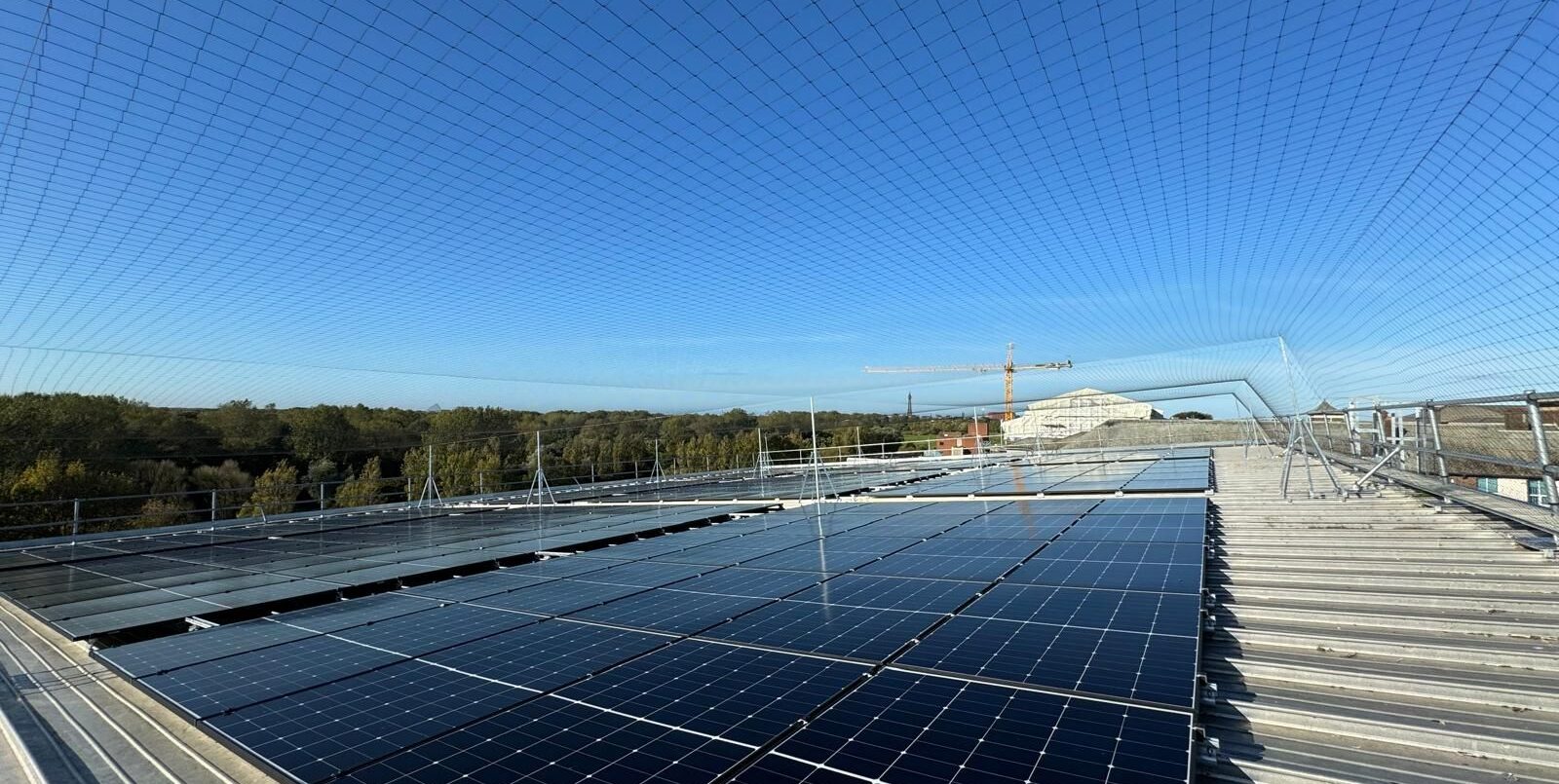
Bird netting offers a exceptionally effective exclusion measure, sealing off wide areas such as roof void spaces, loading areas, spaces beneath canopies and bridges, and open outdoor courtyards. When correctly designed, netting prevents birds from nesting and perching within a given space entirely.

Pigeon netting and gull grade netting use different mesh sizes to address each species. Our pest control technicians recommend the mesh gauge, fixing system and support structure for the site because netting installed with the wrong gauge permits birds access through gaps straight away.
Falconry and birds of prey
The expertly trained hawks and other birds of prey in falconry services helps to drive away pest birds from a given location. As soon as a bird of prey is released to the area, it naturally disrupts any established roosting behaviour, prompting pest birds in urban settings to abandon the site entirely.
Ongoing falconry visits are planned throughout and beyond the breeding season, with the schedule being maintained right up until the site is no longer being used as a roost. Using hawks as a consistent humane bird deterrent works best on open sites like car parks, stadiums, retail parks and large rooftops!
Solar panel bird proofing
PV panels consistently attract pigeon-related issues across Lymington. The gap formed between the panels and the underlying roof tiles offers birds a protected, warm environment during every season, and the accumulation of bird guano from nesting activity leads to water damage, obstructed gutters and drains, and the gradual deterioration of roofing materials.

Photovoltaic array bird proofing uses mesh and clip systems installed around the panel perimeter to block the gap completely. The clip system attaches around the panel frame without penetrating the panels or compromising their output in any way, and the mesh installation keeps birds from nesting beneath the panels while helping to prevent the problem from returning season after season!
Pest Bird Species in Lymington
{Feral pigeons and gulls are the cause of the lion’s share of bird pest enquiries logged across Lymington, though starlings, sparrows, and a range of other species are similarly capable of causing fouling, noise, and structural damage to properties throughout the area. Pigeons can be addressed with immediate proofing solutions. Gulls, however, benefit from legal protection and therefore require a carefully considered course of action that is shaped entirely by whether or not nesting activity is already underway.}
Feral pigeons in Lymington
Feral pigeons constitute the most frequently encountered pest bird species found across Lymington. They form roosting and nesting sites on window ledges, fire escapes, rooftops, and bridge structures across the area, creating considerable quantities of bird droppings that pose a public health and safety concern whilst leading to significant and ongoing maintenance costs for property managers.

Feral pigeon guano is inherently acidic in composition and actively hastens the deterioration of both metal finishes and stone surfaces through corrosive chemical action. The droppings themselves are known carriers of Salmonella and a range of further pathogens of concern, and guidance issued by the Royal Society for Public Health clearly identifies bird waste as a significant public health risk for commercial premises, particularly where birds are active in proximity to food storage or preparation areas.
Gulls and seagulls in Lymington
Seagulls have established Lymington’s rooftops their base for many decades now and have grown largely comfortable in the presence of people during the calmer months away from breeding season. The instant eggs appear, however, everything changes. Regular access to the roof comes to a halt, outdoor spaces sitting directly beneath the nest become practically impossible to occupy, and the ceaseless diving and crying reaches a crescendo that does not ease until the young birds finally fledge in the later weeks of summer.
Pigeons and seagulls often occupy the same rooftops, yet controlling gulls presents a considerably greater challenge. Gulls are more substantial, long-living birds that routinely return to the same nesting site year after year, and they benefit from full legal protection under the Wildlife and Countryside Act 1981.
Dismantling a gull nest or removing its eggs without the appropriate licence is prohibited under current legislation. Our team acts fully within the established legal framework governing pest management in relation to protected species, offering straightforward guidance on the actions that may be taken without delay alongside those that will require a formal licence application, supported by recorded evidence of public health or safety concerns.
Bird Proofing for Lymington Properties
Maintaining a Lymington property free from pest birds really comes down to identifying the right solution for your specific building! Bird spikes work exceptionally well on slim ledges, yet they simply cannot protect larger surfaces without leaving unwanted gaps. Netting that has been poorly specified for either the bird species or the structure itself will give those determined birds access straight through the gaps. Get the specification right first time and everything else follows!
Our pest control technicians undertake a comprehensive site assessment prior to advising on a solution. The survey examines the entire building rather than only the most visible roosting areas, as birds will move to neighbouring surfaces once the most appealing ones have been treated.
Our bird control measures are based through the methods of blocking access and dissuasion, stopping birds from birds from forming nesting sites on roofs and ledges. We direct our clients to the most suitable method based on the species involved and the legal protections that govern them, and every solution we provide is both efficient and compassionate.
Physical barriers forms the cornerstone of ethical bird control, with pigeon proofing and deterrence techniques meeting the great majority of domestic and commercial requirements, entirely obviating the need for licensed lethal intervention.
We also offer deliver pest management contracts for Lymington properties, including scheduled inspections, compliance reports for environmental health purposes, and a swift response service should any fresh bird activity be identified between visits.
