


Bird Control Services in Longlands
We deploy a range of bird control methods to deter and prevent the entry of pest birds from both residential and industrial properties. The ideal combination will depend on the property itself, the species involved, and the level of the infestation, which is why our pest control technicians undertake a careful site survey before offering any recommendations.

Bird spikes and bird wire
Bird spikes and bird wire stand amongst the most commonly employed solutions for deterring birds from settling upon ledges, window sills, parapet walls, and roof ridges. Standard stainless steel spikes are designed to cover flat ledge surfaces, preventing birds from roosting whilst causing absolutely no harm whatsoever to them.

Steel springs and wires are fixed between pillars or anchor points across ledges and structural surfaces to create bird wire systems. The wire creates an uneven landing zone that birds will not use. Once correctly installed, both systems endure harsh weather conditions without requiring frequent maintenance.
Bird netting in Longlands
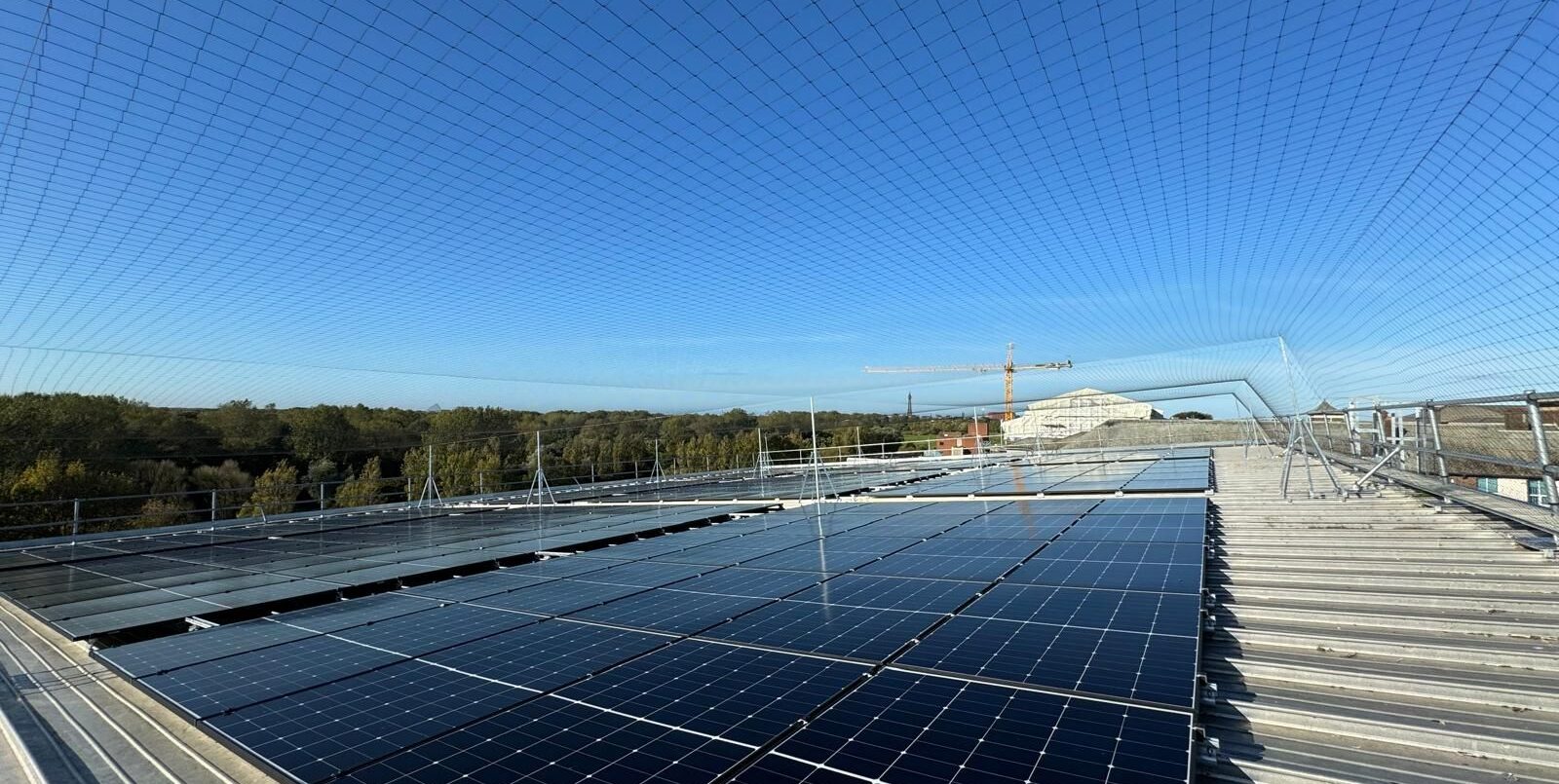
Bird netting is a fantastic exclusion method used to enclose substantial areas including roof voids, loading bays, under canopies and bridges, and open courtyards. When correctly installed, netting prevents birds from building nests and settling in a space completely!

Pigeon netting and gull grade netting are manufactured with differing mesh sizes precisely because each species demands a tailored approach. Our pest control technicians carefully determine the appropriate mesh gauge, fixing system and support structure for every individual site, given that netting installed with an incorrect gauge will grant birds access through the gaps almost immediately after installation.
Falconry and birds of prey
Falconry services employ specially trained hawks and other birds of prey to chase pest birds away from a specific location. The presence of a bird of prey disrupts established roosting behaviour and encourages birds in urban settings to vacate the site entirely.
Regular employment of hawks as a humane bird deterrent has proven best across unenclosed locations such as car parks, stadiums, retail parks and large rooftops. Scheduled falconry visits are arranged on a scheduled basis throughout and beyond the breeding season, with the programme being kept active until the site ceases to function as a roosting area.
Solar panel bird proofing
Solar panels regularly attract pigeon infestations across Longlands. The gap between the panels and roof tiles offers birds constant warmth and shelter, and nesting activity creates guano that degrades roofing materials, clogs gutters and drains, and results in water ingress over time.

Solar panel bird proofing operates by fitting a mesh and clip system around the entire perimeter of each panel to completely seal the gap beneath. The clip system secures itself around the panel frame without ever breaching the panels or reducing their output, whilst the mesh installation itself deters birds from nesting underneath and helps ensure the problem does not return with each passing season.
Pest Bird Species in Longlands
Feral pigeons and gulls are account for the vast majority of bird pest call outs across Longlands, though starlings, sparrows and a whole range of other species are similarly capable of causing fouling, noise and structural damage to properties throughout the area. Pigeons? They can be guarded against immediately! Gulls are another matter entirely though, as they are protected by law, meaning the approach taken will change depending on whether or not nesting is already underway.
Feral pigeons in Longlands
Feral pigeons are by far the most common pest bird found across Longlands!. They settle and raise young on sills, fire escapes, rooftops, and bridges throughout the area, producing vast volumes of bird droppings that create a serious public health and safety concern, as well as ongoing maintenance costs for property managers.

Bird guano from feral pigeons is acidic and rapidly accelerates corrosion on both metal surfaces and stonework. The droppings can hold salmonella alongside various harmful pathogens, and RSPH guidance firmly identifies bird waste as a considerable public health risk for commercial premises, particularly in locations where birds are present above food storage or preparation areas.
Gulls and seagulls in Longlands
Gulls have bred on Longlands buildings for decades and have largely lost their wariness of people outside the breeding season. Once eggs are deposited, routine roof access ends, outdoor spaces directly beneath the nest become difficult to use, and swooping and calling becomes more frequent until chicks fledge in late summer.
Pigeons and seagulls commonly favour the same rooftops, yet controlling gull populations creates a far more significant challenge. Gulls are more substantial and longer-lived birds that reliably come back to exact nesting locations season after season, and they receive full legal protection under the Wildlife and Countryside Act 1981.
Dismantling a gull nest or disturbing its eggs without the appropriate authorisation is absolutely prohibited under current legislation. Our team works entirely within the established legal framework governing vermin management in relation to protected species, delivering clear guidance on which interventions may be undertaken without delay and which necessitate a formal licence application, supported by documented evidence of public health or safety concerns.
Bird Proofing for Longlands Properties
Shielding a Longlands property against pest birds calls for thoughtful selection of the best suited deterrent method for the specific building in question. Bird spikes perform reliably on narrow ledges, yet they are unable to provide adequate coverage across wider surfaces, whilst netting that has been incorrectly specified for either the bird species or the structure will provide birds immediate access through the resulting gaps.
Our pest control technicians conduct a detailed site survey before suggesting any system whatsoever. Every section of the building is assessed, not merely the clearest roosting points, because birds will typically shift to neighbouring surfaces once the most attractive locations have been treated.
Our bird control methods operate through exclusion and deterrence, stopping birds from nesting on roof areas and overhangs. We guide clients on the most suitable solution for the species involved, considering all relevant legal protections, and every measure we carry out is both successful and humane.
Humane bird management relies on mechanical exclusion as its core method, with pigeon proofing and deterrence handling most residential and commercial work without requiring licensed lethal control.
We provide pest management contracts for Longlands properties that include planned inspections, compliance reports compiled for environmental health purposes, and a prompt response service should fresh bird activity be identified between visits.
