


Bird Control Services in Horncastle
We apply a range of bird management methods to prevent and repel pest birds from both residential and commercial properties. The most efficient combination will depend upon the building itself, the species involved, and the extent of the infestation, which is why our pest control technicians conduct a detailed site survey before providing any recommendations.

Bird spikes and bird wire
Bird spikes and bird wire rank amongst the most commonly employed solutions for deterring birds from settling on ledges, window sills, parapet walls, and roof ridges. Traditional stainless steel spikes are designed to cover flat ledge surfaces, preventing birds from roosting whilst ensuring they remain completely unharmed.

Bird wire systems are formed using steel springs and wires that are secured between pillars or anchor points, stretching across shelves or structural surfaces to produce an insecure perching area that birds will automatically choose to avoid. Remarkably resilient, both systems are engineered to withstand even the harshest of weather conditions, requiring minimal regular maintenance once they have been accurately and expertly installed.
Bird netting in Horncastle
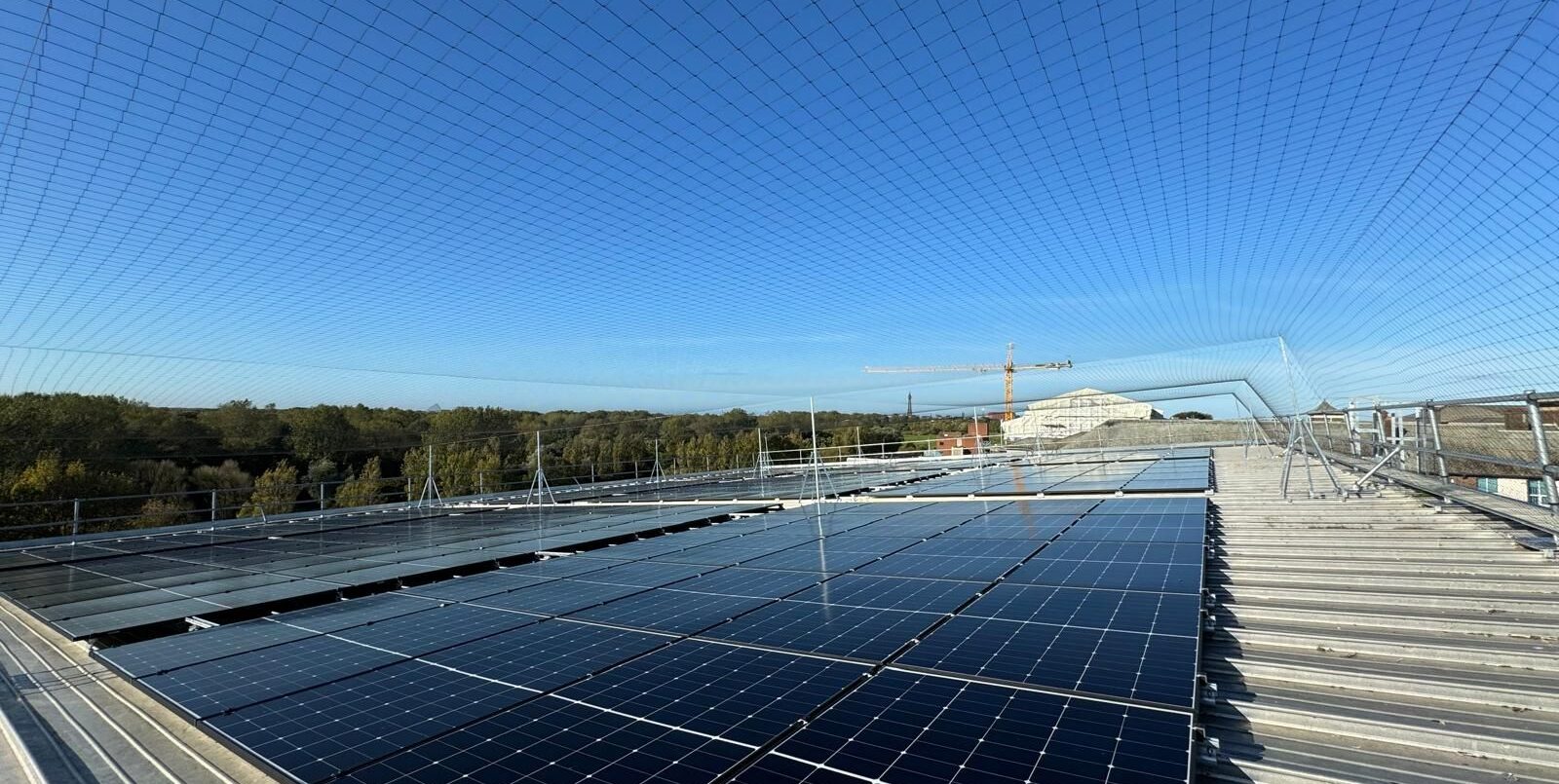
Bird netting encloses large areas including roof voids, loading bays, canopies, bridges and open courtyards. Appropriately specified netting prevents birds from nesting and roosting in a space entirely.

Pigeon netting and gull grade netting are manufactured with differing mesh sizes precisely because each species demands a tailored approach. Our pest control technicians carefully determine the appropriate mesh gauge, fixing system and support structure for every individual site, given that netting installed with an incorrect gauge will grant birds access through the gaps almost immediately after installation.
Falconry and birds of prey
Falconry services utilise highly trained birds of prey and other birds of prey to deter pest birds away from a site. The presence of a bird of prey fully interrupts established roosting habits and persuades birds in urban environments to abandon the site entirely!
Routine falconry visits utilising hawks as a kind bird deterrent are particularly effective across expansive open environments, including parking facilities, stadiums, retail parks, and large rooftops. These visits are carefully scheduled throughout and beyond the breeding season, with the programme continuing until the site has been fully vacated as a roosting location.
Solar panel bird proofing
Solar arrays stand as one of the most common sources for pigeon-related disturbances across Horncastle, where the sheltered gap between the panels and the roof tiles offers birds a protected sheltered haven throughout every season. The nesting behaviour that follows tells a familiar and damaging story, one written in bird guano that gradually wreaks havoc on rooftops, obstructing gutters and drains whilst steadily degrading the very materials that keep a building protected over time.

Photovoltaic panel bird proofing involves installing a mesh and clip system around the perimeter of each panel to thoroughly seal the underlying gap. The clip system secures firmly around the panel frame without penetrating the panels themselves or compromising their energy output, whilst the mesh acts as a dependable barrier that stops birds from nesting beneath the panels and ensures the problem does not return season after season.
Pest Bird Species in Horncastle
{Feral pigeons and gulls are behind the overwhelming majority of bird pest enquiries submitted across Horncastle, though starlings, sparrows, and a range of other species are just as capable of causing fouling, noise, and structural damage to properties throughout the area. Pigeons are suited to immediate proofing solutions. Gulls, however, are afforded legal protection and therefore require a carefully considered course of action that is shaped entirely by whether or not nesting activity is already underway.}
Feral pigeons in Horncastle
Feral pigeons are undeniably the commonest pest bird seen across Horncastle. They roost and raise young on sills, escape stairs, rooftops, and bridges throughout the area, producing vast volumes of bird droppings that create a clear public health and safety concern, as well as substantial maintenance costs for property managers.

Bird guano produced by feral pigeons is inherently acidic in nature and actively speeds up the deterioration of both metalwork and stonework through corrosion. The droppings themselves are capable of harbouring salmonella alongside a range of other harmful pathogens, and guidance issued by the RSPH clearly identifies bird waste as a serious public health concern for commercial premises, particularly in instances where birds are gathering in areas situated above food storage or preparation zones.
Gulls and seagulls in Horncastle
Gulls have been forming nesting colonies on Horncastle’s rooftops for many decades and have, over that time, grown considerably accustomed to human presence outside of the breeding season. Once eggs have been laid, routine access to the roof becomes problematic, outdoor spaces situated directly beneath the nest grow challenging to occupy, and both the swooping behaviour and persistent calling intensify markedly until the chicks reach fledging age in late summer.
Pigeons and seagulls commonly settle on the same rooftops, yet gull management is much more problematic to tackle. Gulls are bigger and longer-lived birds that come back to the very same nesting site year after year, and they are entirely protected by law under the Wildlife and Countryside Act 1981.
Our team works within the legal framework for dealing with protected species, guiding on urgent actions and licence applications supported by documented public health or safety grounds. Taking away a gull nest or eggs without a licence is not legally permitted.
Bird Proofing for Horncastle Properties
Protecting a Horncastle property from pest birds relies wholly on identifying the most appropriate solution for the specific building in question. Although bird spikes are effective on narrow ledges, they are less effective across wider surfaces where gaps remain, and netting that has been incorrectly specified for either the bird species or the structural context will leave access points almost immediately.
Our pest control technicians undertake a full site survey before recommending any system whatsoever. Every corner of the building is assessed, not merely the clearest roosting points, because birds will typically move to neighbouring surfaces once the most appealing locations have been treated.
Our bird control methods operate through exclusion and discouragement, halting birds from nesting on roof areas and sills. We support clients on the most suitable solution for the species involved, taking into account all relevant legal protections, and every measure we carry out is both effective and humane.
Compassionate bird control centres on physical exclusion as its core method, with pigeon proofing and deterrence managing the vast majority of residential and commercial projects without any requirement for licensed lethal control at all!
We offer pest management contracts for Horncastle properties covering scheduled checks, compliance reports for environmental health purposes, and rapid action between visits should fresh bird activity be identified.
