


Bird Control Services in Herne Hill
We implement a range of bird control methods to repel and prevent pest birds from home and industrial buildings. The best solution depends on the structure, the species affected, and the severity of the occurrence, so our pest control technicians assess the site before providing any advice.

Bird spikes and bird wire
Bird spikes and bird wire rank among the most commonly used solutions for deterring birds from settling on ledges, window sills, parapet walls, and roof ridges. Traditional stainless steel spikes are designed to cover flat ledge surfaces, preventing birds from roosting whilst ensuring they remain completely unharmed.

Bird wire systems are built using steel springs and wires that are fixed between pillars or anchor points, stretching across ledges or structural surfaces to produce an insecure perching area that birds will automatically avoid. Exceptionally durable, both systems are designed to endure even the harshest of weather conditions, requiring almost no regular maintenance once they have been correctly and expertly fitted.
Bird netting in Herne Hill
Bird netting serves as a highly effective exclusion method, designed to seal off extensive areas such as roof voids, loading bays, beneath canopies and bridges, and open courtyards. When specified correctly, netting prevents birds from accessing a space to nest or roost altogether.

Pigeon netting and gull grade netting are manufactured with differing mesh sizes precisely because each species demands a tailored approach. Our pest control technicians carefully determine the appropriate mesh gauge, fixing system and support structure for every individual site, given that netting installed with an incorrect gauge will grant birds access through the gaps almost immediately after installation.
Falconry and birds of prey
Falconry service providers employ well-trained hawks and other birds of prey to drive pest birds away from a specific location. The appearance of a bird of prey disturbs established roosting behaviour and prompts birds in urban settings to abandon the site altogether.
Routine falconry visits using hawks as a kind bird deterrent are best suited across expansive open environments, including parking facilities, stadiums, retail parks, and large rooftops. Such visits are meticulously scheduled across and beyond the breeding season, with the programme continuing until the site has been fully vacated as a roosting location.
Solar panel bird proofing
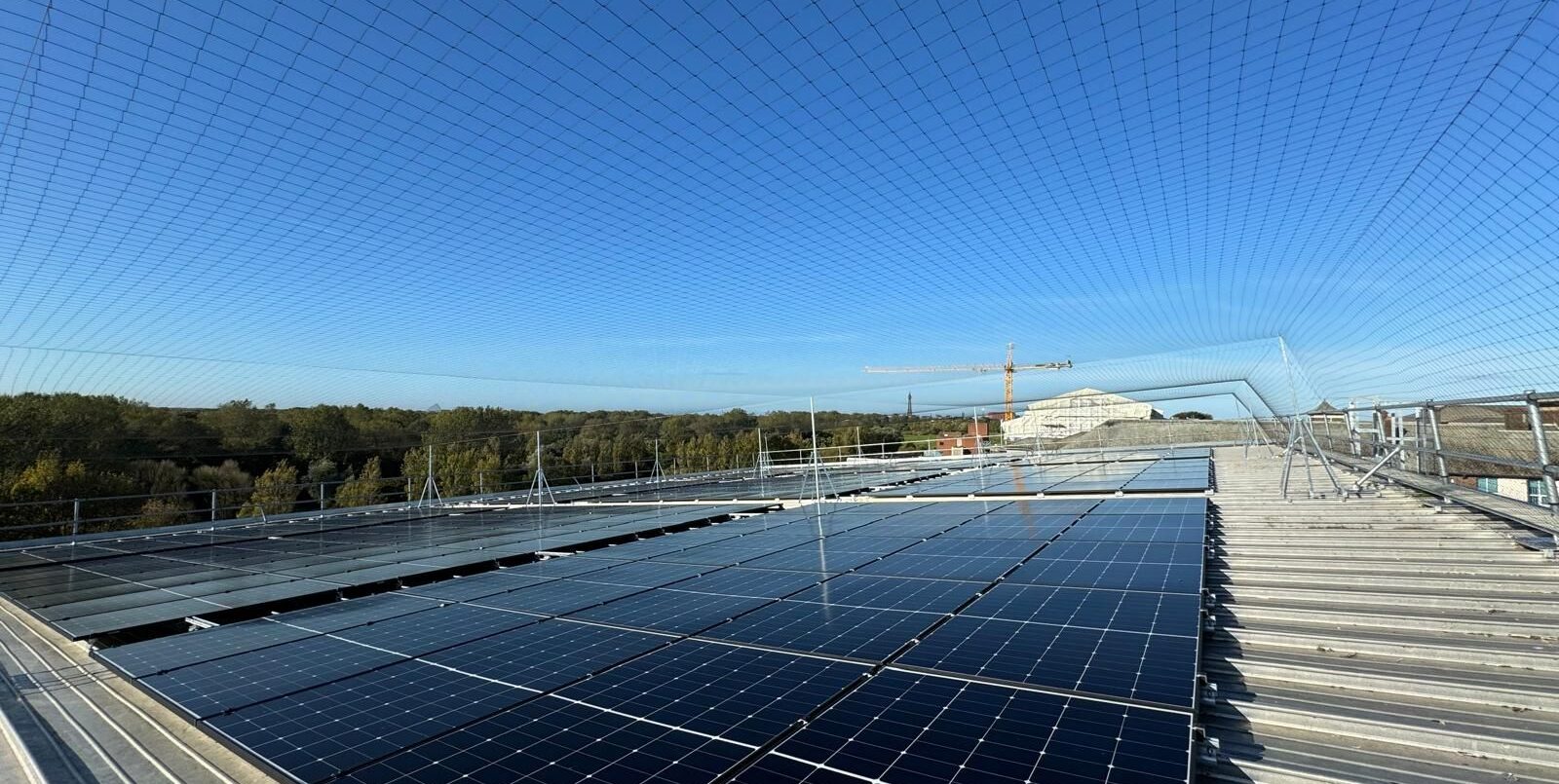
Solar panels often attract pigeon infestations across Herne Hill. The gap between the panels and roof tiles offers birds all-year-round warmth and shelter, and nesting activity results in guano that degrades roofing materials, obstructs gutters and drains, and leads to water ingress over time.

Photovoltaic panels bird proofing involves adding a mesh and clip system around the perimeter of each panel to fully seal the underlying gap. The clip system holds firmly around the panel frame without penetrating the panels themselves or compromising their energy output, whilst the mesh acts as a effective barrier that keeps birds from nesting beneath the panels and ensures the problem does not return over time.
Pest Bird Species in Herne Hill
Feral pigeons and gulls generate the greater part of bird pest call-outs across Herne Hill, though starlings, sparrows, and various other species also cause fouling, noise, and structural damage on area properties. Pigeons can be proofed against straight away. Gulls are protected by law, so the required approach differs depending on whether active nesting is already under way.
Feral pigeons in Herne Hill
Feral pigeons make up the most widespread pest bird species found within Herne Hill. They form roosting and nesting sites on window ledges, fire escapes, rooftops, and bridge structures across the area, producing considerable quantities of bird droppings that present a public health and safety concern whilst leading to significant and ongoing maintenance costs for property managers.

Bird guano produced by feral pigeons is inherently acidic in nature and actively increases the deterioration of both metalwork and stonework through corrosion. The droppings themselves are capable of harbouring salmonella alongside a range of other dangerous pathogens, and guidance issued by the RSPH clearly identifies bird waste as a substantial public health concern for commercial premises, particularly in instances where birds are roosting in areas situated above food storage or preparation zones.
Gulls and seagulls in Herne Hill
Gulls have been making themselves at home on Herne Hill rooftops for years now and have well and truly lost their fear of people outside the breeding season. As soon as eggs appear, routine roof access comes to a complete stop, any outdoor spaces sitting directly beneath the nest become almost unusable, and the swooping and squawking only gets more frequent until the chicks finally take flight in late summer!
Pigeons and seagulls regularly occupy the same rooftops, yet dealing with gulls presents a significantly greater challenge. Gulls are larger, long-living birds that habitually return to the very same nesting site year after year, and they enjoy full legal protection under the Wildlife and Countryside Act 1981.
Our team operate strictly within the law governing pest management around protected species, advising on what action can be taken straight away and what will require a formal licence application supported by evidenced public health grounds. Please be aware that removing a gull nest or eggs without a licence is not something that is legally permitted under any circumstances.
Bird Proofing for Herne Hill Properties
Safeguarding a Herne Hill property from pest birds is entirely dependent on identifying the most appropriate solution for the specific building in question. Whilst bird spikes work reliably on narrow ledges, they are less effective across wider surfaces where gaps remain, and netting that has been incorrectly specified for either the bird species or the structural context will leave access points almost immediately.
Our {pest control} technicians perform a comprehensive site assessment prior to recommending any solution. The survey covers the entire building, not solely the most apparent roosting locations, because the birds will migrate to neighbouring surfaces once the most appropriate ones have been treated.
Our bird control methods function through exclusion and deterrence, preventing birds from nesting on roof areas and sills. We advise clients on the most appropriate solution for the species involved, bearing in mind all relevant legal protections, and every measure we carry out is both successful and kind.
Physical deterrence forms the cornerstone principle of humane bird control, with pigeon proofing and deterrent methods meeting the vast majority of home and business requirements, entirely obviating the need for licensed lethal intervention.
We provide pest management contracts for Herne Hill properties that include scheduled inspections, compliance reports prepared for environmental health purposes, and a prompt response service should recent bird activity be identified between visits.
