


Bird Control Manchester Experts on Common Local Pest Bird Species
The varied pest species found across Golborne each require their own carefully planned strategy. Which bird species is present shapes the legal standing, the chosen method of control, and the timeframe within which the work must be carried out. What follows reflects the situations our bird control team encounters most often across Manchester.
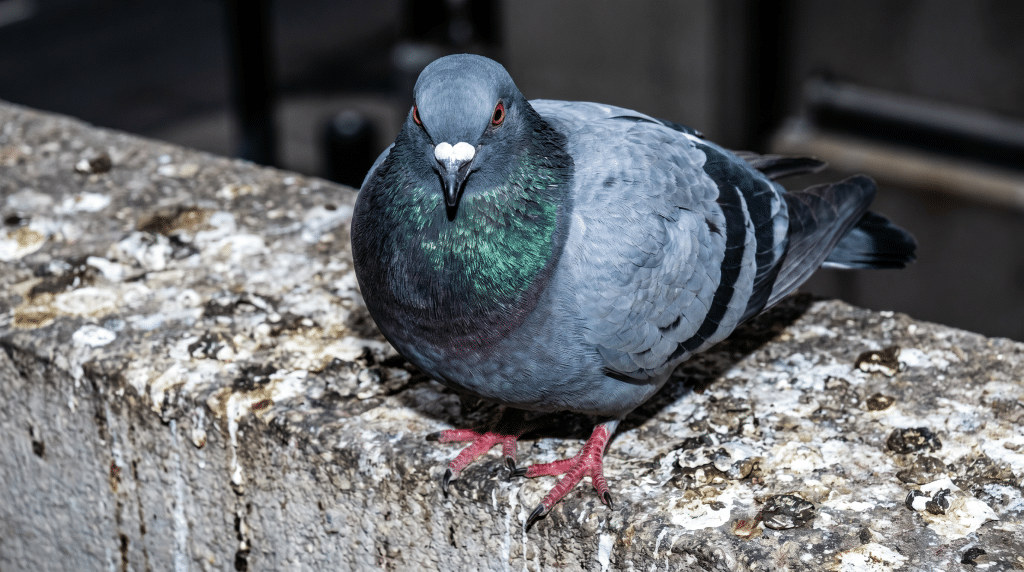

Feral pigeons (Columba livia)
Feral pigeons represent the most prevalent avian pest challenge in Golborne city centre, as well as across the industrial estates and retail parks extending across Manchester. For example, Piccadilly Gardens has sustained a concentrated, year-round pigeon population for decades, and from this established hub the birds have spread to commercial rooftops, multi-storey car parks, railway arches, and large warehouse units throughout the wider region.
An untended breeding pair can result in numerous broods annually, and a pigeon roost left unaddressed in a ledge space or roof void will escalate into a major bird infestation in only two breeding seasons.
Pigeon droppings left by feral pigeons carry a particularly acidic composition. When left to build up over time, this waste damages roofing membranes and obstructs drainage channels, whilst its contact with metal fittings and structural steelwork quickens the corrosion process significantly. Feral pigeons have no protected status under the Wildlife and Countryside Act 1981, meaning that pest control treatment and deterrent measures may be carried out without the requirement for a licence. Our pigeon control service encompasses the complete range of exclusion and deterrence solutions available.
Gulls (Laridae)
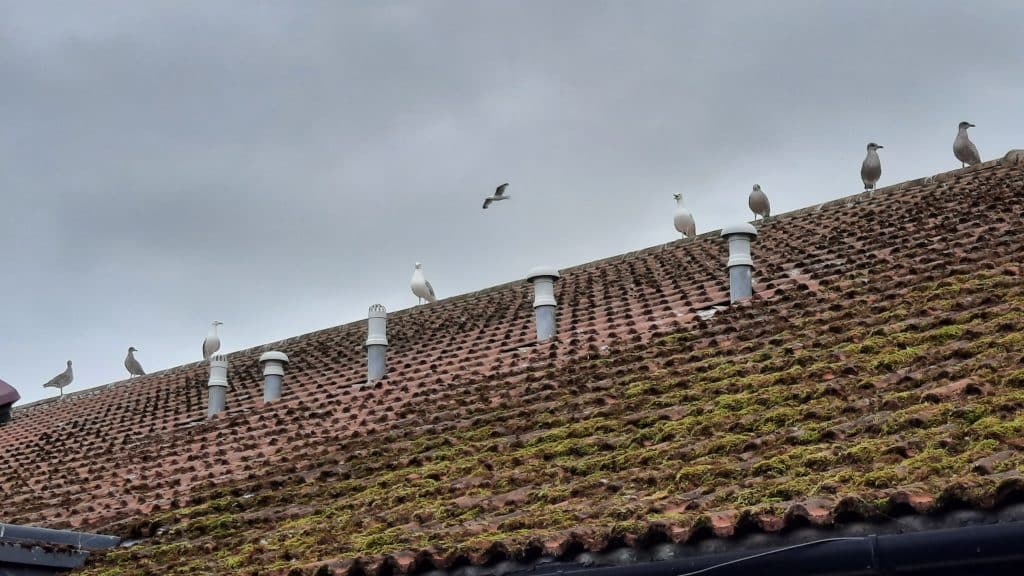
Gull populations have been shifting inland across Golborne for some years now. Herring gulls and lesser black-backed gulls alike are settling on low commercial rooftops all throughout the Golborne area, lured in by food waste from restaurants, retail parks and waste handling sites, not to mention the stored warmth that vast warehouse rooftops keep right through the breeding season!
Breeding gulls grow highly protective of their territory, and well established colonies can make everyday roof access really unsafe for those tasked for building maintenance.
Seagulls retain protected status under the Wildlife and Countryside Act 1981, so that active nests must remain undisturbed unless a licence has been granted. Natural England provides general licences, specifically GL41 which covers public health and safety, enabling licensed pest control companies to undertake certain approved control activities.
Our gull control service functions completely within the boundaries of the relevant legal framework, advising clients on the permissible courses of action available during the current season whilst identifying appropriate deterrent systems to prevent birds from returning to the same rooftop in the year that follows.
Starlings, sparrows, and corvids
Starling bird roosts cause quick and extensive contamination of commercial buildings during the autumn and winter months across Golborne, and dried starling guano presents an equivalent health hazard to that of pigeon droppings.
House sparrows nest within roof voids and beneath unsecured fascias across homes and business properties throughout Golborne, and because both species carry full legal protection, the timing of any work and the approaches employed are matters of particular importance.
Corvids such as crows, jackdaws and magpies are a regular presence on industrial sites throughout Greater Manchester, and when these birds establish nests within chimneys or flues they introduce a genuine fire hazard that must be addressed once the nesting season has concluded. Every survey we conduct identifies pigeons alongside any other bird pest species present, allowing us to construct a programme that entirely respects the legal protections afforded to each.
Bird Control Services Throughout Golborne
Before a bird control solution is ever advised, our pest control technicians undertake a careful and considered inspection of the site in question. The species of bird being proofed against, the building type, and the true scale of the problem all come together to shape the final specification. Most commercial jobs call for a combination of bird control methods rather than relying on a single solution alone, because pest birds will simply shift to adjacent surfaces once one landing point has been closed off. The following range of services represents everything we deploy across Golborne and the surrounding areas.

Bird netting
Bird netting delivers complete exclusion across expansive open spaces, including loading bays, roof voids, canopies, and internal courtyards where pigeons congregate to roost and roost in considerable numbers. A properly specified netting system prevents all bird access to the treated area and, with regular inspection, reliably performs for a full decade. Our pest control technicians hold PASMA and IPAF certifications, enabling safe installation at height on Golborne’s taller commercial and industrial buildings, a capability that many local pest control providers are readily unable to offer. It is important to note that pigeon-grade and gull-grade netting require different mesh apertures, as an incorrect gauge will allow birds to exploit gaps within days of the installation being completed.
Bird spikes
Bird spikes stop pest birds from perching on ledges, parapets, window sills, signage and roof ridges. Picking the best spike specification depends on the breadth of the surface and the species you are targeting: tighter, narrower arrays work very effectively for smaller birds, whilst wider spacing suits pigeons and gulls well. And here is the really great part! Spikes are an entirely humane bird control solution. The blunt tipped prongs simply make surfaces uncomfortable to perch or roost on, without causing any harm whatsoever to the birds themselves.
Bird wire and post systems
Bird wire systems work by running tensioned stainless steel wire between subtle low-profile posts, producing an unstable landing surface across larger ledges and stone sills where spike systems would look far too conspicuous. The installation carries minimal visual weight when observed from street level, making it the most appropriate solution for visible commercial frontages and heritage buildings throughout Golborne city centre. Wire systems prove particularly effective as a bird deterrent against gulls in particular, as these birds struggle to use effectively an unstable surface beneath them.
Audible and visual bird scarers
Audible bird scarers produce predator calls and distress signals at varied intervals to stop birds from roosting on site. Sight-based scarers deploy bird of prey replicas to cause rooftops and ledges feel unsafe. Both deterrent types work best when used alongside with physical exclusion measures, as birds grow accustomed to a single scarer operating on a predictable cycle and cease responding to it.
Falconry
We falconry service employs trained hawks and birds of prey to remove established pest bird populations from large open commercial sites. A live bird of prey disturbs roosting and nesting behaviour more efficiently than static control measures across large open rooftops and outdoor areas. Visits are scheduled throughout the breeding season and continue until the site is no longer being used as a roost. The handler logs every visit and provides written compliance records if requested.
Bird nest removal and trapping
Active bird nests are protected under the Wildlife and Countryside Act 1981, but after the nesting season concludes, existing nests must be cleared before deterrents are fitted. Old nesting material harbours parasites and holds on to the scent that lures birds back to the same spot year after year. Our licensed technicians clear the nest, clean the area of guano and debris, and install the appropriate deterrent systems in a single visit. Where pigeon populations are large and deterrents alone prove insufficient, a targeted bird trapping programme can reduce numbers enough for exclusion to hold. Trapping typically runs between six and eight weeks.

Bird fouling removal
Collected bird guano requires treatment as a hazardous material throughout the removal process. When dried, droppings break down into a sift-like particulate dust likely to carrying Salmonellosis and other harmful pathogens if inhaled by anyone cleaning without adequate respiratory protection. Our bird fouling removal service thoroughly clears and disinfects all affected areas before any exclusion work commences. This pre-cleaning stage eliminates the biological scent that would otherwise draw birds directly back through gaps within a newly installed deterrent system.
Why Pest Bird Problems Cost More Than They First Appear
Bird guano has enough acidity to damage a flat roof membrane within a single season alone. The deterioration wrought by an unmanaged bird infestation across a Golborne commercial property passes through drainage systems, structural steelwork, electrical equipment and fire safety infrastructure, causing consequential costs that regularly surpass the investment required for the bird control work itself.
Structural damage and guano corrosion
Drainage channels clogged by bird droppings and nesting material cause a backflow effect that permits water to penetrate the building fabric beneath. Commercial properties fitted with solar panel arrays across Greater Golborne face a particularly specific pest-related risk: guano collects beneath the panels, impedes drainage pathways, and nesting material compressed against electrical connections or junction boxes introduces a fire hazard that the vast majority of property owners only become aware of during a routine maintenance inspection.
Fire risk from nesting materials
Bird nests located within roof voids, chimney flues, or close to electrical wiring pose a genuine fire hazard. Dry nesting material is highly combustible, and nests located near junction boxes or beneath rooftop plant equipment are a common finding across Golborne’s older, existing industrial and commercial properties. Clearing accumulated nesting material during the autumn period between breeding seasons eliminates this risk ahead of the subsequent winter period.
Disease and health risks
Bird species have been identified as carriers of over 60 diseases. Salmonellosis, E. coli, Campylobacter, Psittacosis, Cryptococcosis, and Histoplasmosis are some of the most frequently identified illnesses associated with pest bird fouling and nesting material. Histoplasmosis is a fungal infection that originates from spores present within dried droppings, and the associated health risk is at its greatest when accumulated guano is disturbed in the course of cleaning operations carried out lacking the appropriate respiratory protection in place.
For food businesses and hospitality businesses throughout Golborne, bird presence around loading bays, extractor vents, or open food storage areas is both a compliance matter and a serious health concern. An environmental health inspection that identifies active fouling or nesting material in proximity to food production zones can lead to an improvement notice being issued, or a requirement to cease operations whilst remedial work is carried out.
Secondary infestations
Avian nests and contamination are widely known to attract further pest populations. Fleas, along with bird mites residing within nesting material will migrate into a building once the birds have departed at the close of the season, whilst the heat and organic matter generated by accumulated guano draws in additional insects. Removing the nesting site throughout the course of the programme reduces this secondary pest risk before it has the opportunity to move indoors.

Commercial Bird Pest Control Service Across Golborne
Commercial bird pest control in Golborne supports food businesses, the hospitality sector, retail, healthcare, warehousing, and the sprawling industrial/logistics sites across Greater Golborne and into Cheshire. A significant chunk of our commercial work involves working with facilities managers and property teams. Scheduling outside business hours? Absolutely standard practice! Written compliance documentation comes provided as part of every job, and our technicians operate with complete discretion on customer-facing premises.
Pest Solutions manages rodent control, insect treatments, wasp nest removal and commercial pest contracts throughout Golborne, meaning commercial customers dealing with multiple pest challenges can coordinate everything efficiently through one dedicated pest control company.
We commercial bird control programmes are developed around integrated pest management principles. Each programme unites exclusion, deterrence, and population management into one consistent, site specific approach. We deliver ongoing pest management contracts for commercial properties requiring regular surveys, rapid emergency response between visits, and written reports for environmental health or insurance purposes.
Our commercial bird control programme begins with a no-cost site survey, from which we assess and recommend the most appropriate methods for the building in question before arranging all installation work around your day-to-day operations. Written records of every task carried out are provided to satisfy compliance and insurance requirements. The programme itself is designed with longevity at its heart, with deterrents specified to endure for a decade, scheduled inspections planned to identify fresh pressure at the earliest opportunity, and comprehensive documented evidence of every single visit kept carefully on file.