


Bird Control Manchester Experts on Common Local Pest Bird Species
A range of pest bird species found throughout Cold Hurst each require a specific response. The particular bird species involved determines the legal standing, the control method we recommend, and the timeframe within which the work must be completed. Below is a summary of the bird species our control team most frequently comes across throughout Manchester.
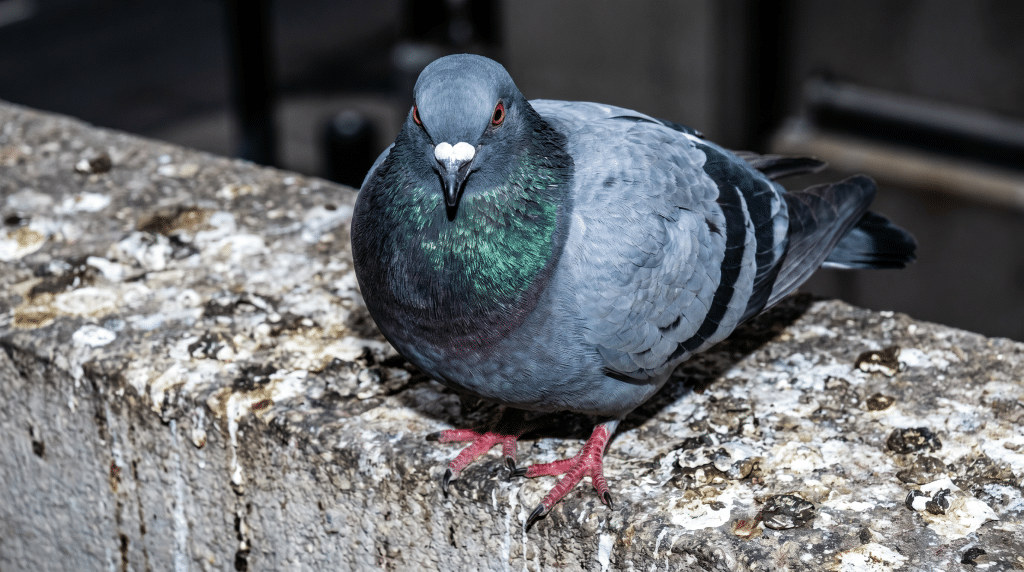

Feral pigeons (Columba livia)
Feral pigeons represent the most prevalent avian pest challenge across Cold Hurst city centre, as well as across the industrial estates and retail parks extending across Manchester. For example, Piccadilly Gardens has sustained a dense, year-round pigeon population for many decades, and from this established hub the birds have spread to commercial rooftops, multi-storey car parks, railway arches, and large warehouse units throughout the wider region.
An existing breeding pair is likely to raising several broods throughout the course of a single year, and a pigeon roost left completely unmanaged within a ledge space or roof void can develop into a full bird infestation in as few as 2 breeding seasons.
Bird fouling produced by feral pigeons is corrosive in nature. When allowed to build up, it causes significant damage to roofing membranes and obstructs drainage channels, whilst its contact with metal fittings and structural steelwork accelerates corrosion gradually over time. Feral pigeons hold no protected status under the Wildlife and Countryside Act 1981, meaning that pest control treatment and deterrent measures may be carried out without the requirement for a licence. Our pigeon control service encompasses the complete range of exclusion and deterrence methods available.
Gulls (Laridae)
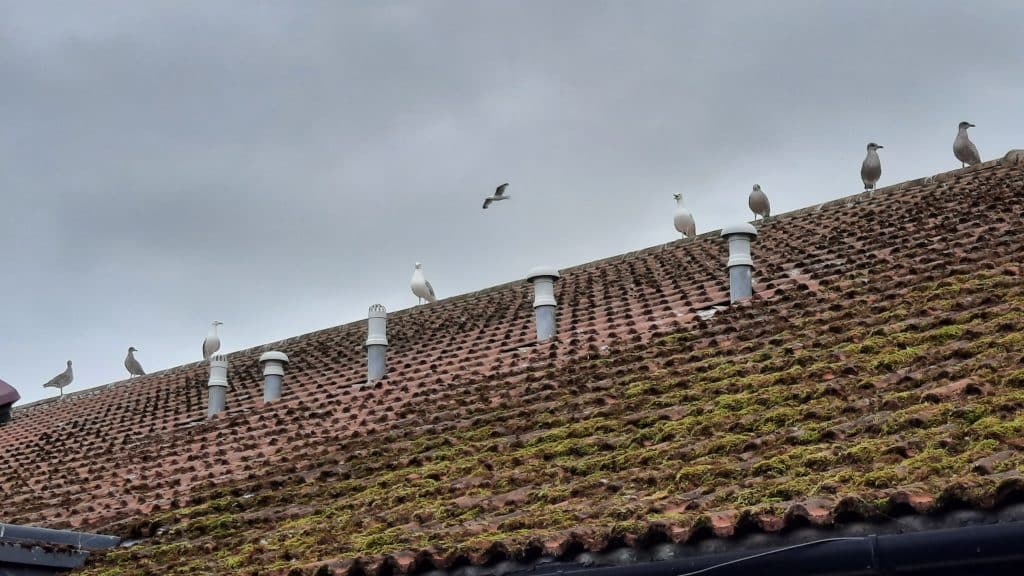
Gull populations have been migrating further inland across Cold Hurst for many years now. Herring gulls and lesser black-backed gulls and lesser black-backed gulls alike have started nesting on broad commercial rooftops throughout the Cold Hurst area, attracted by food waste generated from restaurants, retail parks, and waste handling sites, as well as the warmth that large warehouse rooftops trap during the breeding season.
Nesting gulls become more protective and territorial over their chosen sites, meaning that established colonies can pose a real safety risk to maintenance personnel carrying out routine roof access work.
Gulls have protected status under the Wildlife and Countryside Act 1981, meaning active nests simply cannot be interfered with without the proper licensing in place. Natural England provides general licences, including GL41 which covers public health and safety, and these permit licensed pest control companies to carry out specific approved control activities.
Our gull control service functions fully within the boundaries of the current legal framework, informing clients on the lawful courses of action available during the current season whilst setting out appropriate deterrent systems to prevent birds from returning to the same rooftop in the following year that follows.
Starlings, sparrows, and corvids
Starling roosts deposit quick and substantial fouling on commercial premises throughout autumn and winter across Cold Hurst, and dried starling guano carries the same health risks as pigeon droppings.
Domestic sparrows nest in roof voids and beneath worn fascias on domestic and commercial properties across Cold Hurst. Both species carry legal protection, so the timing and approach are critical.
Crows, jackdaw birds and magpies are members of the corvid family often found on industrial sites throughout Greater Manchester. Corvid nests built inside chimneys or flues present a genuine fire risk and must be removed outside the nesting season. We detect pigeons and all other pest bird species during the survey and tailor the programme around the legal protections applicable to each species.
Bird Control Services Throughout Cold Hurst
Our pest management technicians perform a thorough assessment before recommending any bird control solution. The species in question, the nature of the building, and the extent of the infestation all determine the final specification. The greater part of commercial projects require a combination of bird control methods rather than a solitary approach, as pest birds will relocate to neighbouring surfaces once a single landing point has been eliminated. The following range of services sets out what we use across Cold Hurst and its surrounding areas.

Bird netting
Bird netting delivers full exclusion across broad open spaces, including loading bays, roof voids, canopies, and internal courtyards where pigeons breed and roost in significant numbers. A correctly specified netting system prevents all bird access to the treated area and remains effective for a decade when periodically inspected. Our pest control technicians hold PASMA and IPAF certifications, enabling safe installation at height on Cold Hurst’s larger commercial and industrial buildings, a capability that many local pest control providers simply cannot offer. Pigeon grade and gull grade netting require different mesh apertures, and selecting the incorrect gauge allows birds to pass through the gaps within days of installation.
Bird spikes
Bird spikes stop pest birds from settling on ledges, parapets, window sills, signage and roof ridges. Selecting the appropriate spike specification depends on the size of the surface and the species you are targeting: denser, narrower arrays work extremely well for smaller birds, whilst wider spacing suits pigeons and gulls very well. And here is the very good part! Spikes are an fully humane bird control solution. The blunt tipped prongs simply make surfaces uncomfortable to land on or roost on, without causing any harm whatsoever to the birds themselves.
Bird wire and post systems
Tensioned stainless steel wire is strung between discreet, low-profile posts to form an insecure landing surface across larger ledges and stone sills where traditional spikes would prove far too conspicuous. The visual footprint of this system is extremely small when observed from street level, making it the natural choice for prominent commercial facades and heritage buildings throughout Cold Hurst city centre. Wire systems prove particularly effective as a bird deterrent against gulls, which struggle to rely on a surface that offers no stable foothold beneath them.
Audible and visual bird scarers
Sound-based bird scarers transmit predator calls and distress signals at varied intervals to discourage birds from perching on a site. Visual scarers deploy replicas of birds of prey to render a rooftop or ledge feel less inviting. Both types of bird deterrent systems perform best when employed alongside physical exclusion measures, because birds get used to a single scarer operating on a predictable cycle and eventually stop reacting to it.
Falconry
Our falconry team dispatches trained hawks and birds of prey out to deter established pest bird populations from open commercial sites. The presence of a live bird of prey disrupts roosting and nesting behaviour far more effectively than static bird control measures across large open rooftops and outdoor areas. Falconry visits are closely scheduled throughout the breeding season and continue until the site is no longer being used as a roost. The handler notes every single visit and provides written compliance records if requested.
Bird nest removal and trapping
Active bird nests are protected under the Wildlife and Countryside Act 1981, but once nesting season is over, any existing nests must be cleared before deterrents can go in! How come? Because old nesting material harbours parasites and retains the scent that draws birds back to the very same spot year after year. Our licensed technicians clear the nest, clean the area of guano and debris, and install the appropriate deterrent systems all in a single visit. Where pigeon populations are large and deterrents alone are insufficient, a targeted bird trapping programme can reduce numbers enough for exclusion to hold. Trapping typically runs between 6 and 8 weeks.

Bird fouling removal
Accumulated bird guano definitely must be handled as a hazardous material when it comes to clearing. Dried droppings disintegrate into a fine dust that can carry Salmonellosis and other dangerous pathogens if inhaled during cleaning without proper respiratory protection. Our bird fouling removal service removes and fully disinfects the affected area before any exclusion work begins. Pre-cleaning removes the biological scent that would otherwise attract birds straight back through gaps in a newly installed deterrent system.
Why Pest Bird Problems Cost More Than They First Appear
Bird guano is enough acidic to degrade a flat roof membrane within the course of a one season. The combined damage caused by an unchecked bird infestation across a Cold Hurst commercial property extends through drainage systems, structural steelwork, electrical equipment and fire safety infrastructure, creating consequential costs that regularly surpass what is spent on professional bird control measures themselves.
Structural damage and guano corrosion
Drainage channels blocked by bird droppings and nesting material create a backflow effect that permits water to penetrate the building fabric beneath. Commercial properties fitted with solar panel arrays across Greater Cold Hurst face a particularly specific pest-related risk: guano collects beneath the panels, impedes drainage pathways, and nesting material compressed against electrical connections or junction boxes presents a fire hazard that the majority of property owners only become aware of during a routine maintenance inspection.
Fire risk from nesting materials
Nest sites discovered inside roof voids, chimney flues, or close to electrical wiring present a real fire hazard. Dry nest material is extremely combustible, and nests found near junction boxes or beneath rooftop plant equipment are a regular sight across Cold Hurst’s older industrial and commercial properties. Taking away accumulated nesting material during the autumn window between breeding seasons eliminates this risk well ahead of the winter months that follow.
Disease and health risks
Birds can spread over 60 diseases. Salmonellosis is amongst the most commonly identified in relation to pest bird fouling and nesting material. Histoplasmosis is an infection caused by fungi caused by spores present in dried droppings, and the risk increases when guano is disturbed during cleaning without adequate respiratory protection.
For food service businesses and catering businesses across Cold Hurst, pest bird activity near service entrances, kitchen extractor vents, or open food storage is both a compliance issue and a significant health concern! An environmental health inspection that uncovers active bird fouling or nest material close to food production areas can end in an improvement notice or even a requirement to cease operations while remedial work is completed.
Secondary infestations
Bird nests and build-up are magnets for secondary pest populations! Fleas and bird mites nesting inside nesting material will move into the building once the birds have left at the end of the season, and the heat plus material from a guano build-up lures all manner of other insects. Cleaning the nesting site during the programme removes this additional pest risk before it ever gets the chance to migrate inside!

Commercial Bird Pest Control Service Across Cold Hurst
Commercial bird pest control in Cold Hurst serves the broad range of business environments, from food businesses, hospitality venues, retail units and healthcare facilities through to the vast warehousing, industrial and logistics operations scattered across Greater Cold Hurst and into Cheshire. The greater part of this work unfolds in direct partnership with site managers and dedicated property teams. Appointments scheduled outside of standard business hours are perfectly normal, written compliance documentation is delivered as an essential part of every job, and our technicians carry out all work with quiet professionalism on any premises where customers are present.
Pest Solutions handles rodent control, insect treatments, wasp nest removal, and commercial pest contracts across Cold Hurst, which means commercial clients experiencing multiple pest problems can take care of absolutely everything through just one pest control company!
Our professional bird control programmes operate on integrated pest management principles. Each programme combines exclusion, deterrence, and population management into an tailored approach for the site. We offer ongoing pest management contracts for commercial properties requiring planned surveys, prompt emergency response between visits, and written reports for environmental health or insurance purposes.
Our bird control programme for commercial sites commences with a free site survey. We establish the most suitable methods for the site in question and plan installations to work around live operations. Full written records of all work completed are issued to satisfy compliance and insurance requirements. The programme is structured for sustained management: deterrents are specified to endure for a decade, scheduled inspections are arranged to identify new pressure at the earliest opportunity, and documented evidence of every visit is maintained on file.