


Bird Control Services in Boyn Hill
We apply a selection of bird control methods to keep away and prevent pest birds from domestic and commercial buildings. The ideal mix depends on the building, the species present, and the severity of the occurrence, so our pest control technicians examine the site before offering any advice.

Bird spikes and bird wire
Bird spikes and bird wire rank among the most widely used systems for stopping birds from landing on ledges, window sills, parapet walls, and roof ridges. Standard stainless steel spikes cover flat ledge surfaces and prevent birds from roosting without causing them harm.

Steel springs and wires are fastened between pillars or anchor points across ledges and structural surfaces to form bird wire systems. The wire forms an unsteady landing zone that birds will not use. Once properly installed, both systems endure harsh weather conditions without requiring frequent maintenance.
Bird netting in Boyn Hill
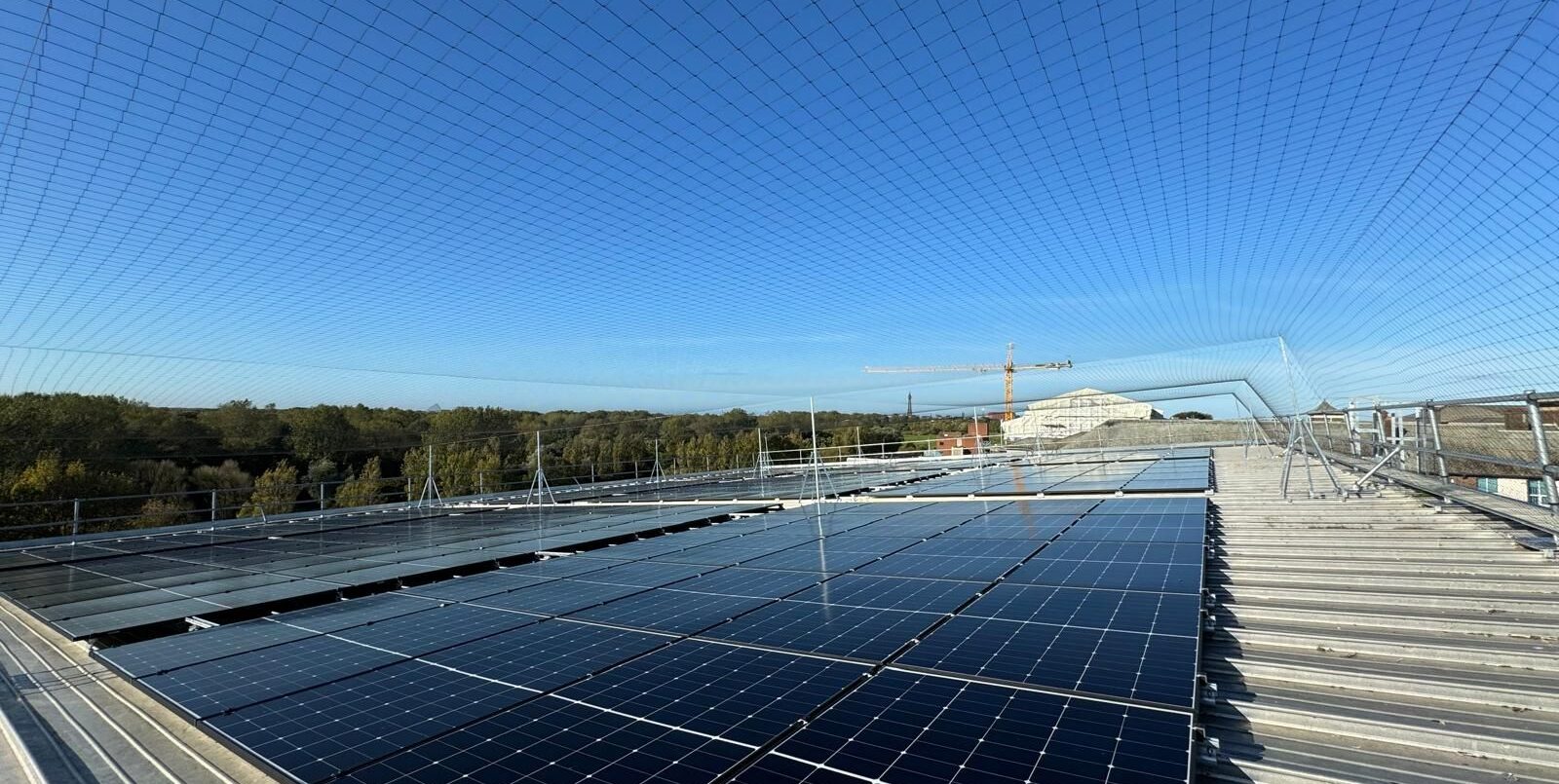
Bird netting functions as a very effective exclusion solution for blocking off wide areas such as roof voids, loading bays, the undersides of canopies and bridges, and open courtyards. When installed correctly, it makes it impossible for birds from being able to nest or roost within a given space entirely.

Pigeon netting and gull grade netting are manufactured with different mesh sizes, each one specifically designed to target each species. Our pest control technicians establish the correct mesh gauge, fixing system and support structure for each individual site, because netting that has been installed with an incorrect gauge will give birds access through the gaps almost immediately!
Falconry and birds of prey
Falconry specialists deploy highly trained hawks and a selection of other birds of prey to drive pest birds away from a given location. The inherent presence of these predatory birds alters established roosting behaviours and drives pest birds in urban settings to vacate the site completely.
Regular falconry visits are scheduled all the way through and beyond the breeding season, continuing until the site is no longer being used as a roost.
Using hawks as a reliable and humane bird deterrent works most effectively across unobstructed environments such as parking areas, stadiums, retail parks, and large rooftops. Regular falconry visits are scheduled throughout and beyond the breeding season, with the programme carrying on until the site is no longer being used as a roosting location.
Solar panel bird proofing
Solar panels frequently attract pigeon infestations across Boyn Hill. The gap between the panels and roof tiles offers birds all-year-round warmth and shelter, and nesting activity results in guano that deteriorates roofing materials, impedes gutters and drains, and causes water ingress over time.

Photovoltaic panel bird proofing involves the fixing of mesh and clip systems around the perimeter of each panel to successfully seal any existing gaps. The clip system secures itself around the panel frame without affecting the panels or reducing their energy output, whilst the mesh installation effectively prevents birds from nesting beneath the panels and ensures the problem does not return year after year.
Pest Bird Species in Boyn Hill
Feral pigeons and gulls account for the greater part of bird pest call-outs across Boyn Hill, though starlings, sparrows, and different other species also add to fouling, noise, and structural damage on area properties. Pigeons can be proofed against straight away. Gulls are protected by law, so the required approach varies depending on whether active nesting is already under way.
Feral pigeons in Boyn Hill
Feral pigeons represent the most widespread avian pest species found across Boyn Hill. They create roosting and nesting sites across ledges, fire escapes, rooftops and bridge structures across the area, generating large quantities of bird droppings that present simultaneously a public health and safety concern and substantial maintenance expenditure for those responsible for managing properties.

Feral pigeon guano is very acidic in nature and actively speeds up the corrosion of both metal structures and stonework over time. The droppings themselves are known carriers of salmonella and a variety of other dangerous pathogens, and RSPH guidance firmly identifies bird waste as a substantial public health risk for any commercial premises where birds are found to be active above food storage or preparation areas.
Gulls and seagulls in Boyn Hill
Seagulls have made Boyn Hill’s rooftops their habitat for many years now and have grown almost entirely comfortable in the presence of people during the more peaceful months away from breeding season. The time eggs appear, however, the situation changes entirely. Routine access to the roof stops, outdoor spaces sitting directly beneath the nest turn practically impossible to occupy, and the relentless diving and crying reaches a crescendo that doesn’t subside until the young birds finally take flight in the later weeks of summer.
Pigeons and seagulls regularly settle on the same rooftops, yet managing gulls is considerably more complex to tackle. Gulls are more sizeable and longer lived birds that revisit to the same nesting site year after year, and they are entirely protected by law under the Wildlife and Countryside Act 1981.
Interfering with a gull nest or collecting its eggs without the required licence is unlawful under current legislation. Our team operates fully within the established legal framework governing pest management in relation to protected species, offering straightforward guidance on the actions that may be taken without delay alongside those that will require a formal licence application, supported by recorded evidence of public health or safety concerns.
Bird Proofing for Boyn Hill Properties
Shielding a Boyn Hill property against pest birds demands meticulous selection of the optimal deterrent method for the particular building in question. Bird spikes work effectively on narrow ledges, yet they fail to provide adequate coverage across wider surfaces, whilst netting that has been mis-specified for either the bird species or the structure will provide birds immediate access through the resulting gaps.
Our {pest control} technicians conduct a comprehensive site assessment prior to suggesting any solution. The survey examines the entire building, not solely the most obvious roosting locations, because birds will move to nearby surfaces once the most favourable ones have been treated.
Our bird control measures operate through the concepts of exclusion and deterrence, preventing birds from setting up nesting sites on roofs and ledges. We direct our clients towards the most appropriate method based on the species involved and the legal protections that govern them, and every method we provide is both practical and kind.
Humane bird control places emphasis on physical exclusion as its chief method, with pigeon proofing and deterrence meeting the vast majority of residential and commercial requirements without any necessity for licensed lethal intervention.
We offer pest management contracts for Boyn Hill properties covering scheduled inspections, compliance reports for environmental health purposes, and rapid response between visits should fresh bird activity be identified.
